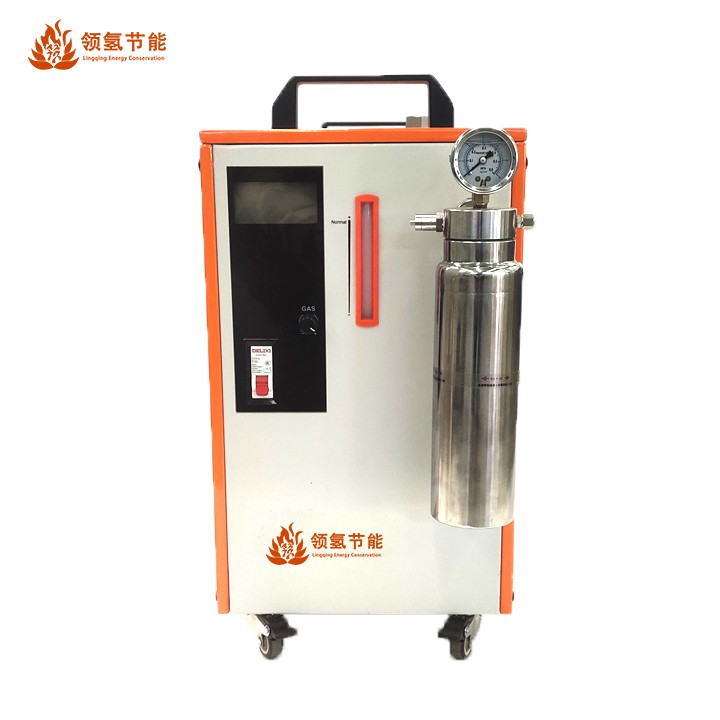
As a supplier of Brown’s Gas Generators, I’ve received numerous inquiries about the gas surface tension of the gas produced by these generators. This topic is not only fascinating from a scientific perspective but also crucial for understanding the unique properties and applications of Brown’s gas. Brown’s Gas Generator
Understanding Brown’s Gas
Brown’s gas, also known as HHO gas or oxyhydrogen, is a mixture of hydrogen and oxygen gases produced through the process of electrolysis. The Brown’s Gas Generator uses an electrolytic cell to split water molecules (H₂O) into hydrogen (H₂) and oxygen (O₂) gases. This gas has a variety of applications, including welding, cutting, and as a fuel additive to improve combustion efficiency.
The Concept of Surface Tension
Surface tension is a physical property of liquids and gases that arises from the cohesive forces between molecules. In the case of gases, surface tension is related to the intermolecular forces and the energy required to create a new surface. It is typically measured in units of force per unit length, such as dynes per centimeter (dyn/cm) or newtons per meter (N/m).
The surface tension of a gas is influenced by several factors, including temperature, pressure, and the chemical composition of the gas. In general, gases with stronger intermolecular forces have higher surface tensions. For example, polar gases like water vapor have higher surface tensions than non – polar gases like nitrogen or oxygen.
Surface Tension of Brown’s Gas
Determining the exact surface tension of Brown’s gas is a complex task due to the nature of the gas mixture and the experimental challenges involved. Brown’s gas is a mixture of hydrogen and oxygen in a 2:1 ratio, similar to the composition of water. However, the physical properties of Brown’s gas can be affected by the conditions under which it is produced, such as the type of electrolyte used in the electrolytic cell, the voltage applied, and the temperature.
One of the reasons why measuring the surface tension of Brown’s gas is difficult is that it is a highly reactive and flammable gas. Specialized equipment and safety precautions are required to conduct accurate measurements. Additionally, the surface tension of Brown’s gas can vary depending on the presence of impurities or other gases in the mixture.
Some studies have attempted to measure the surface tension of hydrogen and oxygen gases separately. Hydrogen has a relatively low surface tension due to its small molecular size and weak intermolecular forces. Oxygen, on the other hand, has a slightly higher surface tension than hydrogen. However, when these gases are combined to form Brown’s gas, the surface tension may be different from the simple sum of the surface tensions of the individual gases.
Factors Affecting the Surface Tension of Brown’s Gas
Temperature
Temperature has a significant impact on the surface tension of gases. As the temperature increases, the kinetic energy of the gas molecules also increases, which weakens the intermolecular forces and reduces the surface tension. In the case of Brown’s gas, an increase in temperature can lead to a decrease in surface tension, making the gas more likely to spread and mix with other substances.
Pressure
Pressure also affects the surface tension of gases. Higher pressures can compress the gas molecules, increasing the intermolecular forces and thus increasing the surface tension. However, the relationship between pressure and surface tension is not always linear, and other factors such as temperature and gas composition can also influence the outcome.
Gas Composition
The composition of Brown’s gas can vary depending on the design and operation of the Brown’s Gas Generator. For example, the presence of trace amounts of other gases or impurities can affect the surface tension of the gas. Additionally, the ratio of hydrogen to oxygen in the gas mixture can also have an impact on the surface tension.
Applications Related to Surface Tension
The surface tension of Brown’s gas plays an important role in its various applications. In welding and cutting processes, the surface tension of the gas can affect the way it interacts with the material being worked on. A lower surface tension can allow the gas to spread more easily over the surface of the material, improving the efficiency of the welding or cutting process.
In the case of using Brown’s gas as a fuel additive, the surface tension can influence the way the gas mixes with the fuel. A gas with a lower surface tension can mix more effectively with the fuel, leading to better combustion and improved fuel efficiency.
Importance for Our Business
As a supplier of Brown’s Gas Generators, understanding the surface tension of the gas produced by our generators is crucial for several reasons. Firstly, it allows us to optimize the design and operation of our generators to produce gas with the desired properties. By controlling factors such as temperature, pressure, and gas composition, we can ensure that the gas produced has the appropriate surface tension for specific applications.
Secondly, knowledge of the surface tension of Brown’s gas helps us to educate our customers about the unique properties and benefits of our products. When customers understand how the surface tension of the gas affects its performance, they can make more informed decisions about using our Brown’s Gas Generators in their operations.
Conclusion

In conclusion, the surface tension of the gas produced by a Brown’s Gas Generator is a complex and important topic. While it is challenging to measure the exact surface tension of Brown’s gas, understanding the factors that affect it can provide valuable insights into the properties and applications of this unique gas.
Oxygen Welding Machine If you are interested in learning more about our Brown’s Gas Generators and how the surface tension of the gas can benefit your business, we invite you to contact us for a detailed discussion. We are committed to providing high – quality products and technical support to help you achieve your goals.
References
- Adamson, A. W., & Gast, A. P. (1997). Physical Chemistry of Surfaces. Wiley.
- Israelachvili, J. N. (2011). Intermolecular and Surface Forces. Academic Press.
- McCabe, W. L., Smith, J. C., & Harriott, P. (2005). Unit Operations of Chemical Engineering. McGraw – Hill.
Jiangsu Lingqing Energy-saving Technology Co., Ltd.
We are one of the most reliable brown’s gas generator manufacturers and suppliers in China. With abundant experience, we warmly welcome you to buy customized brown’s gas generator made in China here from our factory. If you have any enquiry about quotation, please feel free to email us.
Address: Building #7, No. 1 Linhe Road, located on the west side of Anlan Road and north of Linhe Road, Huaiyin District, Huaian City, Jiangsu Province.
E-mail: jslingqing@163.com
WebSite: https://www.lingqingtech.com/
