Hey everyone, I’m Jake, and I’ve been running a craft brewing equipment supply business for the last 8 years. Over that time, I’ve worked with hundreds of brewers—from tiny 1-barrel home setups to 15-barrel nanobreweries—and one thing I can say for sure: the coolest beer in the world doesn’t matter if someone gets hurt making it. I’ve seen a rookie brewer burn their arm on a too-hot kettle, a tank overflow all over an electrical panel and nearly short out their whole system, and even a friend who forgot to lock out a pump while cleaning and ended up with a bruised (and embarrassing) wrist. None of these are life-threatening, but they’re all avoidable, and they leave a bad taste in your mouth way worse than a skunky IPA. Today we’re breaking down the real, no-BS safety precautions I push every brewer I work to follow—stuff that’s not just from a textbook, but from years of fixing gear and calming down panicking brewers at 2 a.m. on brew day. Craft Brewing Equipment

First up, let’s talk about electrical safety. This is probably the most common hidden risk because it’s easy to ignore until it’s too late. A lot of new brewers love to rig up their own gear to save a few bucks—adding a new pump without checking the amp rating, or running an extension cord across the brew floor where someone might trip on it and yank a hot kettle’s plug out. Here’s the thing: craft brewing equipment uses high amps, especially when you’re firing up electric kettles or heating jackets. A standard household extension cord isn’t built to handle that kind of load, and running it under foot traffic? That’s a recipe for a frayed wire and a shock (or worse). When we sell gear, I always tell brewers to hire a licensed electrician to install fixed circuits for all high-power equipment—no exceptions. I also make sure every unit we ship has grounded plugs, and I even include a free set of surge protectors for control panels, because a power spike can fry a $2,000 controller faster than you can say “mash temp.” Another quick tip: keep all electrical components at least 3 feet away from any open water or wort. I’ve seen wort spill and pool right around a pump motor—wort is slightly sugary, so it conducts electricity way better than plain water. Even a tiny splash can cause a short, so if you’re cleaning or transferring, cover your motors with a plastic sheet when you’re not actively using them.
Next, pressure safety on tanks and kettles. This one’s a big deal for any brewer using closed systems—whether you’re force carbonating in a serving tank, running a closed transfer, or even boiling in a pressurized kettle. I can’t tell you how many times a brewer has texted me, “My priming tank is leaking” or “The pressure relief valve on my kettle popped off too early.” Let’s get one thing straight: every piece of pressure-rated brewing gear has a pressure relief valve (PRV), and you should never, ever tamper with them. Those valves are calibrated to release at a specific pressure—usually 15 psi for most fermenters and 30 psi for boiling kettles—so if you plug them or adjust the spring to let more pressure build, you’re asking for a rupture. A tank rupturing isn’t like a soda can popping; it’s got enough force to bend steel, and flying parts can cause serious injury. Last year, a brewer in Ohio tried to “boost” carbonation by cranking the PRV setting on a serving tank. The tank overpressurized during a transfer, and the valve blew so hard it dented a steel beam in their brewery. No one got hurt, but they spent $1,200 on repairs and lost a whole batch of beer. The fix? Test all PRVs annually with a pressure gauge, never exceed the rated pressure for your gear, and never leave a pressurized tank unattended for more than 15 minutes—even if you have an alarm. Oh, and one more thing with closed transfers: always vent the line before connecting to another tank. Trapped pressure in a hose can whip back when you open the valve, and I’ve seen a hose snap and hit a brewer in the shoulder hard enough to knock them over.
Now, thermal safety—because hot wort and boiling water don’t play. Brew day is all about moving fast, and it’s easy to get so focused on hitting your mash temp or boil time that you forget you’re standing next to a 20-gallon kettle of 212-degree liquid. I always tell brewers to wear proper PPE, but not the cheap stuff you can pick up at a hardware store. I sell heat-resistant gloves made specifically for brewing, not the kitchen ones that melt if you get a splash of wort on them. And long pants—no shorts on brew day. I had a new brewer show up to a training session in cutoff shorts, and when a kettle spigot leaked, she got a second-degree burn on her calf that kept her out of the brewery for a week. Beyond gear, plan your brew floor layout so hot kettles are against a wall, not in a high-traffic area, and leave at least a 2-foot clear space around them. I also recommend installing heat shields on any heating jackets or steam lines—those lines can get up to 300 degrees, and a lean against one isn’t going to feel good. Another pro tip: never add cold water to a hot kettle or vice versa without checking the temp. Sudden temperature changes can cause metal to warp, which leads to leaks, and if that warped kettle has boiling wort inside, you’re in for a mess. Last month, a brewer I work with added a gallon of cold tap water to their boiling kettle to top off, and the kettle’s seam split right at the bottom—they lost 50 gallons of wort and had to shut down for 3 days to get it repaired.
Then there’s chemical safety, and I’m not just talking about sanitizer. Wait—actually, sanitizer is the big one here. A lot of new brewers don’t realize that most brewing sanitizers are harsh if you get them on your skin or inhale them, and mixing different sanitizers can be dangerous. For example, never mix chlorine-based sanitizers with acid-based ones—they create toxic fumes that will make your eyes burn and can damage your lungs. When we sell sanitizers alongside our equipment, I always include a one-page cheat sheet on storage: keep sanitizers in their original labeled containers, away from food and drink, and lock them up if you have curious employees. Also, when cleaning lines or tanks, always wear chemical-resistant gloves and goggles. I see brewers grab a pair of latex gloves for cleaning, and those tear within 10 minutes when exposed to caustic cleaners. And never, ever use regular household bleach as a sanitizer in bulk—too many variable concentrations, and it can leave a bad chemical taste in your beer. Stick to the brewing-specific sanitizers we supply, and test your sanitizer strength with test strips every time you mix a batch. If a sanitizer is too weak, it won’t kill bacteria; if it’s too strong, it’s a hazard.
Wait, let’s not forget about lift and movement safety, because brew gear is heavy. A 50-gallon fermenter is 400 pounds when full, and I’ve watched brewers try to move it by themselves to save time. That’s a no-go. I recommend installing floor drains close to all tanks, so you don’t have to move them to clean or transfer, and investing in a small hydraulic cart or a lifting device if you need to reposition gear. When we deliver equipment, our team always helps set up heavy items and shows brewers how to safely tilt a kettle or move a tank without straining their back. I also tell breweries to label all gear with its weight when full, so everyone knows what they’re dealing with. Lifting wrong is one of the most common workplace injuries in breweries, and it’s totally preventable. Take your time, use proper lifting technique (bend your knees, not your back), and ask for help if the load is too heavy.
Oh, and one last thing—operational safety on pumps and valves. Brew pumps are amazing, but they can pull a hand right in if you’re not careful. I’ve had to pull a brewer’s finger out of a pump intake (don’t worry, he’s fine, just a scar) because he reached into the line to clear a clog without turning the pump off and unplugging it. Always, always lock out and tag out pumps before working on them. Lockout/tagout is OSHA required for a reason—turning a switch isn’t enough; someone else could bump it while you’re working. When we sell pumps, we include lockout tags and show brewers how to use them correctly. Also, keep pump intakes covered with a fine mesh screen—they catch grain debris, but more importantly, they stop loose clothing, gloves, or fingers from getting pulled in. I can’t tell you how many times a screen has saved a brewer from a stupid mistake.
Look, I’m not here to scare anyone away from brewing. It’s my passion, and I love seeing small brewers turn their ideas into award-winning beer. But safety isn’t a hassle—it’s part of running a good brewery. The last thing I want is for one of my customers to get hurt, or lose months of work because they skipped a precaution. When I supply equipment, I don’t just drop it off and leave. I do a walkthrough, go over every safety feature, answer all their dumb questions, and follow up a week later to make sure everything’s working right.
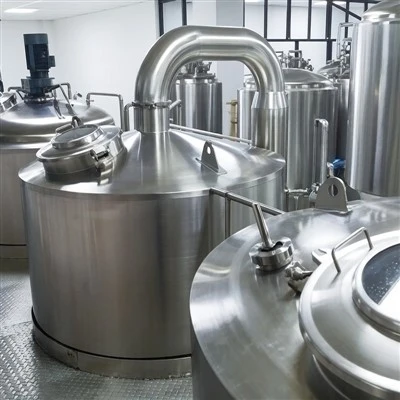
If you’re gearing up for brew day, or thinking about upgrading your system, don’t cut corners on safety. Reach out—whether you’re a homebrewer with a 1-barrel setup or a commercial brewery looking to expand, I can help you pick gear that’s not only efficient for making great beer, but built with safety in mind. We can chat through your space, your volume, and any concerns you have, and make sure you’ve got all the tools and knowledge to keep your team safe.
Brewing Auxiliary Equipment References:
- Brewers Association. (2022). Safety Guidelines for Commercial Craft Breweries. Boulder, CO: Brewers Association.
- Occupational Safety and Health Administration (OSHA). (2021). Brewery Safety and Health Topics. Washington, DC: U.S. Department of Labor.
- American Society of Brewing Chemists (ASBC). (2020). Safety in Brewing Operations: A Practical Guide. St. Paul, MN: ASBC.
- National Fire Protection Association (NFPA). (2019). Standard for Fire Prevention and Control in Breweries. Quincy, MA: NFPA.
Wenzhou Jinggong Machinery Equipment Co., Ltd.
We are one of the most professional craft brewing equipment manufacturers and suppliers in China. With abundant experience, we warmly welcome you to buy customized craft brewing equipment at competitive price from our factory. If you have any enquiry about quotation, please feel free to email us.
Address: No.Jiadi Industrial Zone, Yaoxi Town, Longwan District, Wenzhou City, China.
E-mail: jinggong2026@163.com
WebSite: https://www.jg-ind.com/
