Hey everyone, if you’ve ever tried to build anything with wires—whether it’s a simple LED setup for your bike or a full on industrial machine—you know how big of a headache routing can get. As a wire harness supplier that’s been in this game for over 15 years, I’ve seen my fair share of projects where bad routing turned a “should be easy” install into a week-long nightmare, and even some that failed completely because we skipped a key step. Today I wanna break down the actual, no-BS routing considerations we walk through with every single client—no textbook jargon, just real stuff that matters when you’re building harnesses that actually work, and last. Wire Harness

First off, let’s get one thing straight: routing a wire harness isn’t just “running wires from point A to point B.” If you think that, you’re gonna end up with a harness that frays, shorts, or gets caught on something as soon as it hits the field. The biggest first consideration we start with is the environment the harness is gonna live in. Not every job is in a climate-controlled server room. I had a client last year making agricultural equipment—their combines run in 100-degree heat out in the field, dust blowing everywhere, and they gotta handle freezing cold come winter. We didn’t just grab a random wire; we had to account for how the insulation holds up to UV rays (super important for outdoor stuff, anyone who’s ever seen a cable get brittle in the sun knows this), temperature extremes, and even moisture. If a harness is gonna be near water—like on a boat or a RV’s exterior—we can’t have gaps anywhere where water can seep in, and the routing path can’t let pooling happen. We always flag the environment first, because that dictates so many other choices.
Next up is the physical space constraints. Let’s be real, most clients don’t have unlimited room to stuff wires. A car door panel, a medical device housing, a small robot arm—these are tight spots where wires can’t bend too sharp, or they’ll crack the conductor inside, or pinch against metal edges. Bending radius is a huge one here. A lot of new engineers forget that every wire (and harness bundle) has a minimum bend radius. If you bend a wire too tight, the copper strands inside start to break over time. For example, a thin 22-gauge signal wire has a smaller minimum bend than a thick 8-gauge power wire that carries amps. We measure the available space, and adjust the routing path so we never go under that minimum. We also use things like split looms or custom molded clamshells to keep wires spaced properly, so they’re not rubbing against each other or sharp metal. Last quarter we had a robotics client that was cramming a harness into a 3-inch wide gap—we had to split the bundle into two smaller sections, route them separately around a small motor mount, and use flexible conduit to keep them from pinching when the robot moved. It took a bit more planning, but the client didn’t have to redesign their whole part, which saved them a ton of money.
Then there’s movement and vibration, which is non-negotiable for anything that isn’t stationary. Heavy machinery, cars, construction equipment, even handheld power tools—all vibrate like crazy. If you route a harness that’s fixed tight to a moving part, that’s a recipe for failure. We always plan for strain relief, both at the connector ends and along the run. Strain relief is basically giving the wire a little “give” so when the part moves, the flex isn’t on the actual wire or the solder joints. For example, in a car’s engine bay, we use rubber grommets at the firewall so wires don’t rub as the engine vibrates. We also leave a little extra slack where wires connect to motors or switches, so they can move without pulling the connector loose. I’ve seen so many field failures that were just from bad routing around moving parts—like a harness on a forklift that got stretched because there was no slack, so one wire broke. We now build that slack into every design from the start, instead of adding it on later, which cuts down on issues big time.
Electrical interference is another thing most people don’t think about until it’s too late. If you have a harness that carries low-voltage signal wires (like for a sensor) right next to high-voltage power wires, you’ll get interference. That means the sensor will give bad readings, or the whole system will glitch. We route low-voltage and high-voltage wires separately, usually in different looms or on opposite sides of a panel, to keep them from crossing paths. We also avoid running parallel wires for long distances, because that amplifies the interference. We once had a medical device client where their ECG signal kept getting noisy—turns out they had the signal wires running right next to the 120V power cord in the harness. We rerouted the signal wires away, added a small shield to the signal loom, and the noise was gone. It’s not rocket science, but you have to catch it in the routing design, not after the prototype is built.
Durability and serviceability go hand in hand, too. A harness that’s impossible to repair or replace is a pain, and ends up costing more money in the long run. We always think about how easy it is to access the harness and connectors, especially for clients that do maintenance in the field. For example, if a harness is routed behind a big metal plate that you have to take 10 bolts out of every time you need to fix it, that’s a problem. We’ll route it so connectors are accessible, use quick-disconnect terminals where possible, and label every single wire and connector (we add both color-coding and printed labels, so even if the color wears off, you can tell which is which). We also avoid routing harnesses through areas that get damaged by tools or debris, and use thicker insulation or conduit where needed to make sure it holds up to accidental bumps. A client in the aerospace industry had a harness that was routed in a tight spot near other parts—we used a reinforced nylon conduit for that section, and added a few extra clamps to secure it, so technicians could work around it without damaging it.
Oh, and don’t forget about weight and cost, especially for projects where every pound adds up. If you’re building a drone, for example, extra weight from a big bulky harness can cut into flight time. We’ll use smaller gauge wires where possible (as long as they can handle the current) and thinner looms that are still durable, instead of overbuilding the harness. For automotive clients, cost is always a factor—we’ll adjust the routing path to use less material, avoid custom parts where we can, and make sure the assembly is simple so it doesn’t take extra time to put together. Last year we had a client that wanted a harness for a line of electric scooters—they initially wanted a very heavy, overbuilt harness. We worked with them to adjust the routing to use smaller gauge wires, a lighter split loom, and standard clamps instead of custom mounts, which cut the harness cost by 18% without sacrificing any performance. That’s the kind of value we’re here for, not just building a harness that works, but one that fits their budget.
Wait, also—thermal management. Wires don’t like being too hot, and if they’re routed right next to a hot engine or a power component that generates heat, their insulation can degrade faster, or even cause a fire. We always check the temperature ratings of every wire, and route them away from heat sources, or use heat-resistant insulation for that section. For example, in a car’s exhaust system area, we use XLPE insulation or Teflon-coated wires, which can handle way higher temperatures than standard PVC. We also leave a little space around the harness where it’s near heat, so air can circulate and cool it down, instead of it being pressed tight against a hot metal part. I had a client a while back that didn’t think about this—they routed a harness right next to their oven’s heating element in a commercial kitchen appliance. Within a year, the insulation melted, causing a short. We fixed it by rerouting the harness, adding heat-resistant wire, and leaving a ½ inch gap between the harness and the heat source, and that problem never came back.
Let me also say this—communication with the client is key here. Every project is different, and the client knows their product best. We don’t just show up with a one-size-fits-all approach. We ask questions: What environment is this harness going to be in? How much movement is there? Do you need to service this regularly? What’s your budget and timeline? Those answers shape every routing decision we make. For example, a medical device needs to be super reliable, with no chance of contamination or short circuits, so we use seamless conduit and avoid any areas where bacteria could grow. A outdoor playground ride needs to be impact-resistant and hold up to kids touching it, so we use extra tough insulation and rounded edges to prevent cuts.
If you’re working on a project right now and you’re stressing about harness routing—whether it’s a prototype, a production run, or something in between—don’t waste time guessing. The worst thing you can do is skip the routing planning and end up with a harness that fails in the field, which costs way more to fix than taking the time to do it right upfront. As a wire harness supplier, we’ve been through hundreds of these scenarios, and we can help you navigate every consideration—from environment and space to durability and cost—so your harness works as good as it looks. We can tweak designs, adjust routing paths, make sure all the electrical and physical requirements are met, and get you a harness that’s built to last, no matter what it’s going into.
If you’re ready to chat about your next project, whether it’s small or large, hit us up to connect. We’re here to answer any questions, walk you through our process, and make sure your wire harness routing is spot on from day one.
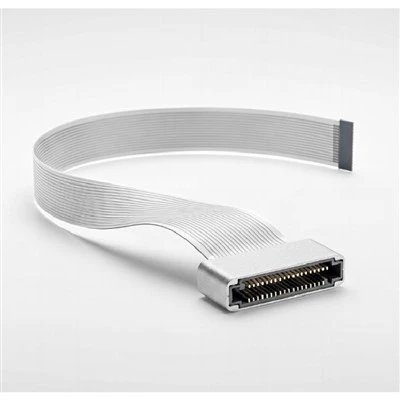
Display Flexible Flat Cable References:
- Miller, T. (2022). Wire Harness Design and Installation: Best Practices for Industrial Applications. Industrial Press.
- Jones, L. (2021). Electrical Routing for Mobile Equipment: Minimizing Failure in Vibration-Prone Environments. Journal of Wiring Systems and Network Technologies.
- Smith, A. (2020). Environmental Considerations for Wire Insulation and Routing in Harsh Conditions. IEEE Transactions on Components and Packaging Technologies.
Tennrich Electronics Technical Development (Kunshan) Co., Ltd.
As one of the most professional wire harness manufacturers and suppliers in China, we’re featured by quality products and low price. Please rest assured to buy cheap wire harness for sale here from our factory. We also accept customized orders.
Address: NO.159 South Wusongjiang Road ,Kunshan Economic Technical & Development zone,Suzhou city,Jiangsu province, China.
E-mail: foreigntrade@tennrich.net
WebSite: https://www.china-ffcs.com/
