Hey there, if you’re an OEM supplier like me, you know inventory management isn’t just a “back office task”—it’s the make-or-break thing that keeps your clients happy, your cash flow healthy, and your factory not stuck with a pile of useless parts. I’ve been in this game for 8 years, working with small-to-mid-sized brands that sell everything from wireless accessories to home kitchen gear, and let me tell you, I’ve made every inventory mistake in the book. Like that time 5 years ago we held 3,000 custom USB ports for a client who bailed on a launch, and those ports were so branded we could never resell them. Total $12k down the drain. So today I’m breaking down what actually works for OEM inventory—no fancy corporate jargon, just real stuff I use every single day. OEM
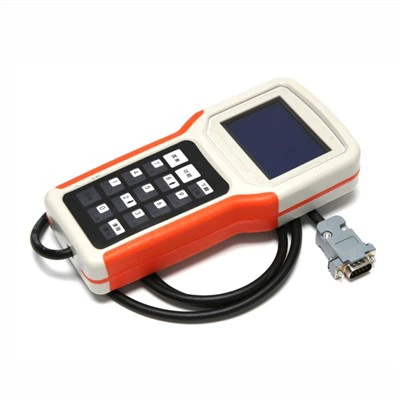
First, let’s get one thing straight: OEM inventory isn’t the same as retail inventory. Retailers hold finished goods to sell directly to customers, but we hold raw materials, custom parts, and semi-finished stuff that’s tied to specific client orders. If you mess this up, you either can’t ship a rush order (which makes the client hate you forever) or you’re left with dead stock that’s worth zero. That’s the tightrope we walk.
Let’s start with the basics: stop treating all parts the same. I used to monitor every single nut and bolt with the same intensity, and that was a waste—until I adopted the ABC analysis, but adjusted it for OEM. Wait, not just the basic ABC where A is high-value, fast-moving stuff. For OEM, A parts are custom client-specific high-value items—like a branded circuit board for a client’s new smart speaker, or a custom molded case for their wireless headphones. These are the ones that cost the most, and if you overstock them, you get that dead stock I mentioned earlier. B parts are generic stuff that fits multiple clients—like standard USB cables or unbranded plastic clips. C parts are tiny, cheap stuff—screws, tape, labels, the stuff that you don’t think about until you need 10,000 of them in 2 days.
Here’s how I adjust ABC for my line: I track A parts in real time, weekly. I count B parts every two weeks, and C parts every month or so. Why? Because a $5 custom circuit board that we hold 500 of is $2,500 tied up in nothing, but a $0.05 screw? 10,000 of them is only $500, and I can almost always get extra from the same supplier in 48 hours if I run low. That’s a game-changer. I used to count all inventory once a quarter, and I’d end up with a surprise shortage of B parts right before a big order ship date. Now, focusing on the high-stuff first keeps me from panicking.
Next, nail the demand forecasting—but don’t rely on spreadsheets alone. As an OEM, your demand isn’t random; it’s tied directly to your clients’ order schedules. The problem is, clients lie sometimes—they’ll say “we need 10,000 units by October” then push it back to December, or suddenly add 5,000 units without warning. My old spreadsheet system couldn’t handle that. Now, I use a simple inventory software (I won’t plug a brand, just look for one that lets you link each part to a specific client order) that pulls in all my open orders, projected order dates, and even their past order patterns. For example, one client always places a bigger order 2 months before Black Friday, so I bump up my stock of their A parts in August, not September.
But here’s the real trick: I check in with my top 10 clients every single month (not just when they need something) to confirm their upcoming orders. Not a generic “hey, need anything?”—a specific question: “Your Q4 order for the smart thermostats—still looking for 15k units, delivery by mid-Nov? Any changes?” 9 times out of 10, they’ll tell me if they need to shift the date or adjust the quantity, which lets me tweak my inventory before I waste money ordering parts. Last year, a client told me they pushed a 5k unit order back by 3 weeks, and I didn’t even order their custom parts yet—so I didn’t tie up $8k in dead stock. That’s way better than finding out after I already bought everything.
Now, the big one for OEM: managing custom vs. generic parts. This is where 90% of new OEMs mess up. Custom parts—those branded circuit boards, molded cases, any part that has a client’s logo or specific specs—are the devil. You can’t resell them to anyone else, so overstocking them is a death sentence. My rule for custom parts is simple: I only order what I need for the confirmed order, plus a 5% buffer. Wait, why 5%? Because sometimes parts get damaged in shipping, or we have a defect in production, so you need a little extra, but not enough to make a pile of unusable stuff. That’s it. No 10% buffer, no 20%—just 5%. I used to add 15% because I was scared of defects, but I ended up with 200 extra custom cases once that cost $3 each, totaling $600. Small, but it added up.
Generic parts, on the other hand, are your friend. These are parts that fit any client, like standard batteries, USB cords, plastic housings that aren’t branded. For these, I keep a 30-day safety stock. Why? Because if a client suddenly adds a rush order (like “we need 2k units by next week”) and I don’t have the generic parts, I have to drop everything and reorder, which costs me time and sometimes extra fees from the supplier. 30 days of safety stock means I can handle those last-minute requests without panicking. I also use bulk pricing for generic parts—if I buy 10k standard batteries instead of 5k, I pay 20% less, so that safety stock doesn’t cost me as much.
Speaking of suppliers—your inventory team isn’t just your own. Your suppliers’ lead times make or break your inventory. A lot of OEMs forget that if your circuit board supplier takes 6 weeks to deliver, you can’t order that part 2 weeks before the order is due. Last year, I had a supplier whose lead time went from 4 weeks to 8 weeks because they had a labor strike, and I didn’t check. I ended up rushing a custom part from a local supplier, paying 3x the regular price, because I didn’t account for supply chain shifts. Now, I check my key suppliers’ lead times every single week—for A parts (custom) and B parts (generic). If a supplier’s lead time goes up, I adjust my order timing with clients, or if possible, lock in a backup supplier for critical parts. I work with 2 suppliers for every custom A part that takes more than 4 weeks to make, just in case one falls through. That extra $50 a month in backup supplier communication is way cheaper than paying rush fees.
Now, semi-finished goods—this is another pain point for OEMs. Semi-finished stuff is like half-assembled products, right? I make a lot of semi-finished goods once the order is confirmed, not before. Wait, that’s another rule I live by: don’t build or assemble anything before the client confirms the final order. I used to build 50% of a client’s order before they signed the final contract, just to “be ready,” and when they bailed, I was stuck with a pile of partially assembled units that were worthless. Now, I only hold raw materials, not semi-finished or finished goods, until the client signs off on the final order. The only exception is if a client pays a deposit upfront (like 50% of the order value) before we start, then I can move forward. That’s a quick way to protect your cash flow—get that deposit, so if anything goes sideways, you’re not left holding the bag.
Let’s talk about dead stock, because it’s unavoidable, even when you do everything right. You will end up with parts that no one uses, whether it’s a custom part from a client that folded, or a generic part that you bought too much of. The worst thing you can do is let that dead stock sit in your warehouse for years, taking up space and tying up cash. I do a dead stock review every quarter. For custom parts, I list them on a private marketplace for OEMs—there are platforms where other suppliers will buy custom parts for their own clients, sometimes for 50-70% of what I paid. That’s way better than throwing them away. For generic parts, I either discount them to other clients (like “buy 10k USB cords, get 2k extra free”) or donate them to a local maker space for a tax write-off. Last quarter, I got rid of $2,000 worth of dead custom parts that were just sitting there, and freed up space in my warehouse for actual active orders.
Wait, also—cycle counting, not just full counts. A full annual inventory count is a nightmare, it shuts down production for a day, and you’ll find mistakes that happened months ago. Now, I do cycle counts every week. Each week, I count a different category of parts: this week it’s A custom parts, next week it’s B generic parts, etc. I do this during slow times, so it doesn’t mess up production. If I find a discrepancy—like my software says I have 1,000 standard batteries, but I only have 987—I check where the 13 went, maybe a worker used 10 for a sample order and forgot to log it. That catches mistakes early, before they turn into a big problem. Last month, a cycle count found that I had 200 extra custom cases from a year ago, so I was able to sell them before I forgot they existed. That’s way better than waiting a year to do a full count and realizing you wasted $600.
Also, don’t sleep on inventory management for samples. As an OEM, you send a lot of samples to clients, right? I used to just hand them out without tracking, and I’d end up with no way to know how many samples I had of a custom part, so when a client said “send me another sample next week,” I’d have to re-make it, wasting money. Now, I log every sample in my inventory system, linked to the client. If a client asks for a sample, I check if I have an existing one in stock, not just re-making it. That’s saved me hundreds of dollars a year, especially for custom samples.
Let me wrap this up with a quick real example from last quarter. I had a client that ordered 10k custom wireless chargers for a holiday promotion. We used the ABC system, so the custom circuit boards (A parts) were only ordered for the confirmed order, plus 5% buffer. The generic parts (batteries, plastic housings) had 30 days of safety stock, and I checked in with the client monthly, so they didn’t push the order date back. I did cycle counts weekly, so when I noticed my circuit board supplier’s lead time went up 2 weeks, I locked in a backup supplier to avoid rush fees. No dead stock, no rush charges, shipped on time, and the client re-ordered another 15k units last month. That’s exactly what we want.

At the end of the day, OEM inventory management isn’t about being perfect—it’s about being intentional. You can’t predict every client’s timeline or every supplier’s delay, but you can build systems that minimize risk, don’t tie up your cash in useless parts, and keep your clients happy. If you’re an OEM supplier struggling with this, or just want to tweak your current process, hit me up to chat about how to adjust these steps for your specific line of work. I’m always down to swap stories (and avoid those dumb inventory mistakes we all make).
Escalator Pcb References
- Inventory Management for OEMs: A Practical Guide for Small and Mid-Sized Manufacturers, National Association of Manufacturers, 2022
- "ABC Analysis Adjusted for Custom Parts in Contract Manufacturing", Journal of Supply Chain Operations, Vol. 18, No. 3, 2021
- "How to Reduce Dead Stock in OEM Production", Manufacturing Today, October 2023
Sanjin Elevator Parts Co., Ltd.
Sanjin Elevator Parts Co., Ltd. is one of the most professional oem manufacturers and suppliers in China, featured by quality products and good service. Please rest assured to buy or wholesale high-grade oem at competitive price from our factory.
Address: 18th Floor, Xinyuan Center, Fenghe Road, Xi’an, Shaanxi, China
E-mail: elevatorparts@westdt.com
WebSite: https://www.sanjinelevator.com/
