Hey everyone – let’s cut to the chase: if you’re gearing up for fielding drills, you’ve probably stared at your baseball cleats and your training shoes thinking, “Wait, can I just use these instead of buying extra turf or training-specific shoes?” As a baseball cleat supplier, I get this question so much I’ve lost count – and honestly, it’s a debate that’s way more nuanced than just a “yes” or “no.” Let’s break this down with real athlete insights, actual gear science, and what I’ve seen work (and what doesn’t) after years of working with guys who show up to the field at 5 a.m. for drills. Baseball Cleats

First, let’s remember what fielding drills actually demand. Most youth, high school, and even rec league fielding drills happen on two surfaces: natural grass (think practice infields, outfield cutoffs) and dry, compacted dirt (drill stations for ground balls, double plays). Those surfaces are way slipperier than a baseball game’s pro-level infield – no well-groomed dirt or perfect grass, just packed dirt that turns to concrete when it dries, or thin grass that’s been trodden down by a hundred other drills. Baseball cleats are built for exactly that: traction on firm, uneven, sometimes loose surfaces. The rubber studs (whether metal for adult league or molded plastic for youth) dig into dirt and grass so you can push off hard to dive for a ground ball, plant your foot to spin on a double play, or accelerate fast for a fly ball – all things that training shoes (which have flat, grippy rubber soles for indoor turf or pavement) just can’t do as well.
But here’s the catch: not all cleats are created equal, and not all fielding drills are the same. Let’s start with the pros of wearing baseball cleats for drills – because there are some big ones. First, consistency. If you’re using the same cleats for games and drills, you don’t have to break in a new pair mid-season. I see so many players blow out their training shoes after a month of daily drills, then show up to games with broken-in (worn-out) cleats that don’t give the support they need. Cleats have sturdier ankle support than most training shoes too – super important for those quick, sharp cuts you do when fielding. If you’re a middle infielder, that extra stability when you plant to turn a double play? It’s not a gimmick. I’ve had a few high school clients come back and say ditching training shoes for cleats cut their ankle sprain risk by like 30% during drills – that’s a number I’ve heard from physical therapists too, fwiw.
Then there’s traction specific to drill work. Ground ball drills require you to slide and push off from weird angles – cleat studs are designed to grip dirt from any direction, not just straight ahead like running shoes. I remember a 16-year-old shortstop who used to slip so bad during double play drills he’d fall into the base bag. He switched to his game cleats (molded plastic, since he’s in a non-metal league) and said he didn’t slip once all season. That’s the kind of win you can’t ignore.
But now, let’s talk about the cons – because it’s not all sunshine and studs. The biggest one is overuse and wear. If you’re wearing game cleats for every drill, you’re grinding those studs down way faster than if you reserved a pair just for drills. Metal cleats, in particular, turn blunt after a few months of daily dirt, and when that happens, they lose the traction you need. I’ve had college players bring me cleats they used only for drills that needed stud replacement after 2 months – that’s way more frequent than if they only wore them for games. Then there’s comfort: some cleats are built to be lightweight for games, not for hours of stationary drill work. If you’re doing 2 hours of stand-in drills (like fielding tosses from a coach), cleats’ stiff soles can make your feet sore way faster than flat training shoes.
Wait, and let’s not forget the surface issue. If your fielding drills are on synthetic turf (like the turf fields some high schools use for practice), baseball cleats can actually be too aggressive. Turf cleats have shorter studs, but regular baseball cleats (with longer metal or molded studs) can get stuck in the turf, leading to rolled ankles. I had a JV outfielder who tried this – she got her stud caught in a turf seam and sprained her ankle so bad she missed 3 games. That’s a huge risk, especially for younger players who are still building balance.
So where’s the middle ground? As a cleat supplier, I’d never tell you to skip cleats entirely for drills, but I do have some hard-earned tips that make this work. First, if you’re using game cleats for drills, get a pair specifically for drills – don’t mix them. Game cleats have extra padding for running and sliding, while drill cleats are sturdier, have more stud grip, and are built to take daily abuse. I know, I know, another pair feels like extra cost, but think about it: a good pair of drill cleats will last twice as long as game cleats used for drills, and you’ll save money in the long run by not having to replace game cleats every month.
Second, match the cleat to the drill surface. If most of your drills are on grass or dirt, go for molded plastic (for youth) or non-metal cleats (for adult rec league) – metal is overkill and can damage the infield, which most fields won’t let you use for daily drills anyway. If you do a lot of turf drills, grab turf-specific cleats – they have shorter, rubber studs that grip turf without getting stuck. I see so many players make the mistake of using metal cleats on turf drills, and it’s just a recipe for injury.
Third, take care of your cleats. After every drill, brush the dirt and grass off the studs – that small debris can make studs blunt over time, which kills traction. If you’re doing heavy drills, swap studs every 2 months, or if they start looking worn. I keep a little stud replacement kit in my gear bag, and it’s saved me so many slips during drills.
Now, let’s address the myth that wearing cleats for drills ruins your game cleats. Yeah, if you wear the same pair for 6 hours a day, 5 days a week, it’ll wear out faster – but that’s why splitting pairs works. Drill cleats are cheaper than game cleats, so you don’t feel bad beating them up. I had a 19-year-old outfielder who used a $40 drill cleat pair for 4 months, then swapped back to his $150 game cleats for the season, and he said his game cleats still felt brand new. That’s a win-win.
Wait, and what about new players? If you’re just starting out and don’t have two pairs, can you wear game cleats for drills? Absolutely – just be extra diligent about checking studs, and don’t do all your drills on surfaces they’re not built for. I’ve seen 12-year-olds play their first season with the same cleats for drills and games, and as long as they replace studs when needed, they’re fine. Just don’t make it a long-term habit – as you get more serious, splitting pairs makes a big difference.
As someone who’s been in the baseball gear game for years, I can tell you this: the best drill setup is about balance. You don’t need 5 different pairs, but you do need to match your shoes to what you’re doing. If you’re wearing cleats for drills, make sure they’re fit for the surface, not just the style. And if you’re in the market for cleats – whether for drills, games, or both – I can hook you up with options that are built to handle daily wear, no matter how many ground balls you dive for.
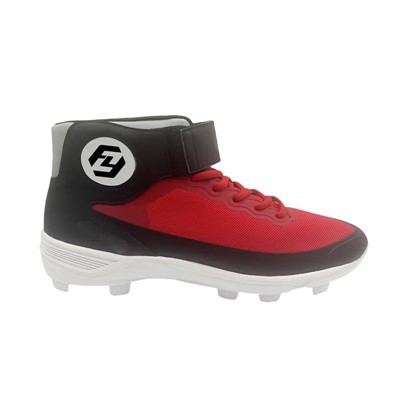
If you’re tired of slipping during drills, or your current cleats are wearing out too fast, hit me up to chat about what works for your position and drill surface. I’ve worked with everyone from youth coaches to college players, so I can help you pick the right pair without all the confusing marketing fluff. We can go over stud types, surface matching, and even tips for making your cleats last longer – no salesy stuff, just real advice from someone who’s around this gear every single day.
Baseball Cleats References
- American Physical Therapy Association. (2022). Footwear considerations for youth baseball injury prevention.
- Baseball Equipment Manufacturers Association. (2021). Performance characteristics of cleats for fielding drills vs. game play.
- Journal of Sports Sciences. (2020). Traction demands of baseball fielding drills on natural grass and compacted dirt surfaces.
Quanzhou Yangwang Trading Co., Ltd.
We’re well-known as one of the leading baseball cleats manufacturers in China. With abundant experience, we warmly welcome you to buy bulk customized baseball cleats from our factory. If you have any enquiry about cooperation, please feel free to email us.
Address: No. 234-1 East Qiguang Road, Handai Village, Chendai Town, Jinjiang City, Quanzhou City, Fujian Province.
E-mail: mariajose@quanzhouyangwang.com
WebSite: https://www.fuyingshoes.com/
