Hey there! As a supplier of Single Moving Plate Cold Presses, I often get asked about the flatness of the pressing surface. It’s a crucial factor that can significantly impact the quality of your pressing operations. So, let’s dive right in and explore what the flatness of the pressing surface of a Single Moving Plate Cold Press really means. Single Moving Plate Cold Press

What is Flatness Anyway?
Flatness, in the context of a Single Moving Plate Cold Press, refers to how even the pressing surface is. A perfectly flat surface has no bumps, dips, or irregularities. It’s like a smooth tabletop where everything sits evenly. When we talk about the flatness of the pressing surface, we’re essentially measuring how close it comes to this ideal, perfectly flat state.
Why is this so important? Well, think about what happens when you’re using a cold press. You’re applying pressure to materials to shape them, bond them, or extract something from them. If the pressing surface isn’t flat, the pressure won’t be distributed evenly across the material. This can lead to uneven results, like some parts of the material being over – pressed while others are under – pressed.
Measuring Flatness
There are a few ways to measure the flatness of the pressing surface of a Single Moving Plate Cold Press. One common method is using a straightedge. You place a long, straight bar on the pressing surface and check for any gaps between the straightedge and the surface. If there are gaps, you can measure them with a feeler gauge. The smaller the gaps, the flatter the surface.
Another way is through laser scanning. Laser scanners can create a detailed 3D map of the pressing surface. The data from the scan can be analyzed to determine the deviations from a perfectly flat plane. This method is more accurate and can detect even the smallest irregularities, but it’s also more expensive and requires specialized equipment.
Ideal Flatness for a Single Moving Plate Cold Press
The ideal flatness for a Single Moving Plate Cold Press depends on the specific application. For general – purpose applications, a flatness tolerance of around ±0.05 mm per square meter of the pressing surface is often acceptable. However, for more precise applications, like in the electronics or aerospace industries, a much higher level of flatness is required. In these cases, the tolerance might be as low as ±0.01 mm per square meter.
If you’re working with materials that are very sensitive to pressure variations, like thin films or delicate composites, you’ll need a pressing surface with extremely high flatness. On the other hand, if you’re pressing more robust materials, a slightly lower level of flatness might be okay.
Factors Affecting Flatness
Several factors can affect the flatness of the pressing surface. One of the main factors is the manufacturing process. If the press is not fabricated properly, there could be inherent irregularities in the pressing surface. For example, if the metal used for the pressing plate has internal stresses or if the machining process is inaccurate, it can lead to uneven flatness.
Wear and tear also play a big role. Over time, as the press is used repeatedly, the pressing surface can start to wear down. This can be due to the friction between the surface and the materials being pressed, as well as the high – pressure loads. The areas that experience more pressure or friction are likely to wear out faster, causing the surface to become less flat.
Another factor is the environment in which the press is used. If the press is exposed to extreme temperatures, humidity, or corrosive substances, it can damage the pressing surface and affect its flatness. For instance, if the press is used in a humid environment, the metal plate can start to rust, which can cause the surface to become rough and uneven.
Maintaining Flatness
To ensure the long – term flatness of the pressing surface, regular maintenance is essential. First of all, you should keep the pressing surface clean. Remove any debris, dust, or residue after each use. You can use a soft brush or a mild cleaning agent to clean the surface. Avoid using abrasive materials that could scratch the surface.
It’s also a good idea to lubricate the moving parts of the press regularly. This reduces friction and wear, which in turn helps to maintain the flatness of the pressing surface. Additionally, you should have the press inspected periodically by a professional. They can check the flatness of the surface and make any necessary adjustments or repairs.
Our Single Moving Plate Cold Presses and Flatness
At our company, we take the flatness of the pressing surface very seriously. We use high – quality materials and advanced manufacturing techniques to ensure that our Single Moving Plate Cold Presses have excellent flatness right from the start. During the manufacturing process, we perform multiple quality checks to measure and correct the flatness of the pressing surface.
We also provide detailed instructions on how to maintain the flatness of the press. Our customer support team is always ready to answer any questions you might have about flatness or other aspects of our cold presses.
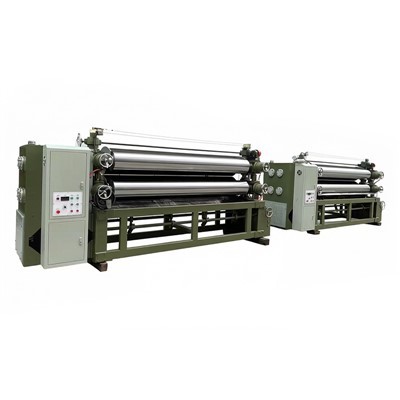
If you’re looking for a Single Moving Plate Cold Press with outstanding flatness, we’ve got you covered. Our presses are designed to meet the needs of a wide range of applications, from small – scale workshops to large – scale industrial operations. Whether you’re pressing wood, plastics, composites, or other materials, our cold presses can deliver consistent and high – quality results.
Get in Touch
Single Side Gluing Machine So, if you’re interested in learning more about our Single Moving Plate Cold Presses or have any questions about flatness or other features, don’t hesitate to reach out. Contact us for a no – obligation consultation and let’s discuss how our cold presses can meet your specific requirements. We’re here to help you make the right choice for your business.
References
- "Manufacturing Technology: Engineering Materials, Processes, and Systems" by Serope Kalpakjian and Steven Schmid.
- "Handbook of Machine Tools: Selection, Design, and Use" edited by Myron C. Shaw.
- Technical documentation on cold press manufacturing from industry standards organizations.
Jiashan Changle Machinery Manufacturing Co., Ltd.
We’re well-known as one of the leading single moving plate cold press manufacturers and suppliers in China, also support customized service. Please feel free to buy advanced single moving plate cold press for sale here from our factory. Quality products and punctual delivery are available.
Address: Building 12, Zone A, Wanyang Innovation City, No. 23 Yucao South Road, Ganyao Town, Jiashan County, Jiaxing City, Zhejiang Province
E-mail: Changle84615620@163.com
WebSite: https://www.changlejx.com/
