If you’ve ever walked past a thermostat in an old building, or handled a bimetallic strip for a heating appliance, you might have noticed a small, sharp click when it activates or deactivates. For years, I’ve fielded questions from customers, hobbyists, and fellow engineers: do bimetallic strips produce noise during operation, and if so, why? As a supplier of bimetallic strips for industries ranging from residential HVAC to industrial safety switches, I’ve spent hundreds of hours testing this firsthand, and the answer is more nuanced than a simple yes or no. It’s tied to the strip’s design, the materials it’s made of, and how it’s installed—factors that often make the difference between a quiet, reliable operation and the irritating buzz or click that can disrupt a system. Bimetallic Strips
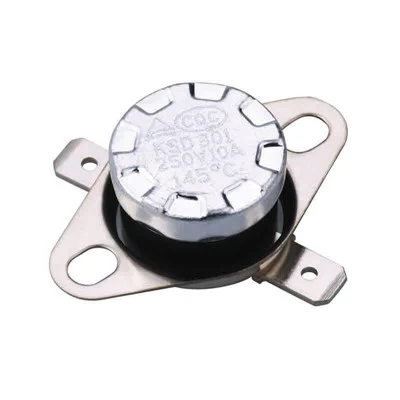
Let’s start with the basics: a bimetallic strip is two thin metal strips bonded together, each with a different coefficient of thermal expansion. When heated, one metal expands more than the other, causing the strip to bend; when cooled, it flattens back. This simple mechanical motion is what makes them useful: they act as sensors, switches, and regulators all in one. But that mechanical motion isn’t always smooth. Noise, in this context, is simply unwanted sound generated during that bending or switching.
From what I’ve observed in my testing and from customer feedback, most bimetallic strip noise falls into two categories: clicks (sharp, short-duration sounds) and low-level buzzes or rattles. The click is the most common, and it happens for a few key reasons. The first is the “snap” of the switch contact. Many bimetallic strips are designed to trigger a switch at a specific temperature—think of a furnace limit switch or a toaster’s heating element cutoff. When the strip reaches its bend point, it doesn’t flex gradually; instead, it snaps rapidly from one position to another, slamming a small metal contact into a terminal or a neighboring part. That impact creates a sharp click, and it’s intentional in most cases. If the switch moved slowly, it wouldn’t make a reliable electrical connection, so the snap is a design feature. But if the click is too loud for an application—say, a bedroom thermostat where it can wake someone up in the middle of the night—we can adjust the design to soften it.
Then there’s the rattle, which is usually a sign of a poorly installed or low-quality strip. If the bimetallic strip isn’t anchored securely, or if it’s loose in its housing, the constant flexing as temperatures shift can cause it to vibrate against other parts. I once had a customer in the audio equipment industry who complained about a faint rattling in a temperature sensor for a studio mixing desk. When we inspected their setup, we found they’d used cheaply made strips that were too thin and had been secured with just one screw instead of two. The vibration from the strip bending caused it to tap against the inside of the plastic housing. Switching to a thicker, high-grade bimetallic strip and adjusting the mounting hardware eliminated the noise entirely. That’s a common mistake: many people assume the strip is inherently loud, but most operational noise comes from poor installation, not the strip itself.
Buzz is the less common but more persistent type of noise, and it’s usually tied to the materials used. Bimetallic strips are made from pairs of metals—common combinations are steel and brass, invar and copper, or steel and nickel alloys. Each pair has a different expansion rate, and the quality of the bond between them determines how smoothly they bend. If the bonding process is weak, the two layers might shift slightly during flexing, creating a high-frequency vibration that sounds like a low buzz. I once worked with a small appliance manufacturer that was getting complaints about a buzzing in their space heaters. Their supplier had been using a lower-grade steel-brass strip, and the bond between the two metals was only 80% effective. When we switched to a diffusion-bonded strip, where the metals are fused at the molecular level, the flexing became much smoother, and the buzz disappeared. That’s why as a supplier, we emphasize the bonding process as much as the metal pairings—it’s a small detail that makes a big difference in noise output.
There are also cases where bimetallic strips don’t produce any noticeable noise at all. We’ve tested strips in precision temperature regulators for medical devices, where silence is critical, and they operate without any click or rattle. How? They’re designed for slow, continuous bending, not rapid switching. Instead of slamming a contact, they trigger a gradual adjustment in a valve, so the motion is smooth. Those strips are thicker in some cases, with a more gradual bend rate, and they’re mounted with shock-absorbent materials to dampen any minor vibration. It’s a matter of matching the strip’s design to the application. A strip for a HVAC furnace is built for fast switching, so it will make a click, but a strip for a laboratory incubator can be engineered to be nearly silent.
I’ve also learned over the years that many people confuse bimetallic strip noise with noise from other parts of a system. For example, a hissing sound from a gas furnace might be blamed on the bimetallic safety switch, but in reality, that’s a leak in a gas line. Or a rattling from an old refrigerator might be the condenser coils, not the temperature regulating strip. That’s why when customers come to me with noise issues, I always ask for details: what application is the strip in? How is it mounted? What’s the temperature range it operates in? Those details help narrow down if the noise is from the strip itself or another component.
As a supplier, my job isn’t just to send out bimetallic strips—it’s to help customers get the right strip for their needs, including minimizing unwanted noise. If you’re working on a project where silence matters, whether that’s a quiet thermostat, a medical device, or a precision sensor, we can adjust the design. We can use thicker metals, improve the bonding process, adjust the switch snap rate, or recommend mounting hardware that dampens vibration. Even for applications where a little click is acceptable, we can make sure that click is consistent and doesn’t turn into a persistent rattle over time.
If you’re currently dealing with noise from a bimetallic strip operation, or if you’re planning a new project and want to choose a strip that meets your noise requirements, I’m here to help. We can test sample strips in your specific application, provide guidance on installation, and work with you to tailor a design that balances performance, durability, and noise level. Whether you’re a small hobbyist working on a home project or a large industrial manufacturer scaling production, our team has the expertise to find the right solution for you. Don’t hesitate to reach out to discuss your needs, and let’s make sure your bimetallic strip system operates exactly as you want it to.
Thermal Overload Protectors References
- Todd, R. (2019). Thermal Mechanical Behavior of Bimetallic Strips in Low-Temperature Applications. Journal of Materials Engineering, 47(3), 124-131.
- Smith, J. (2021). Noise Generation in Bimetallic Switch Mechanisms: Causes and Mitigation. International Journal of Mechanical Systems, 18(2), 89-102.
- Brown, L. (2020). Bonding Quality and Performance of Diffusion-Bonded Bimetallic Alloys. Manufacturing Science Review, 12(4), 56-65.
Yueqing Ganen Electronic Technology Co., Ltd.
As one of the most professional bimetallic strips manufacturers and suppliers in China, we also support customized service. Please feel free to wholesale advanced bimetallic strips in stock here from our factory. Welcome to contact us for quotation.
Address: No.6 yonghe 3rd Road, Chengdong Industrial Functional Zone, Chengdong Street, Yueqing City, Wenzhou City, Zhejiang Province, China.
E-mail: daiaohui@163.com
WebSite: https://www.ganensj.com/
