If you’ve ever worked in dairy farming or supply chain management, you know that keeping milk at the right temperature isn’t just a regulatory box to check—it’s what separates high-quality milk from product that spoils before it even reaches a processing plant. As a supplier of milk storage tanks, I spend most of my days walking farmers and cooperative managers through the ins and outs of tank design, and the question I get more than any other is: what’s the real difference between a direct and indirect milk cooling tank? It’s not just a technical detail—it’s a choice that impacts your bottom line, how much work you put in each day, and even the shelf life of the milk you produce. Milk Storage Tanks
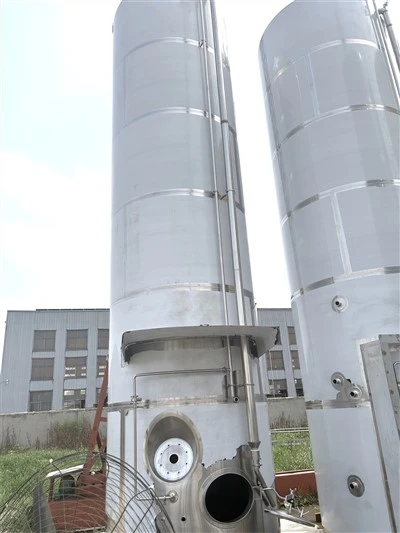
First, let’s start with the basics every dairy professional should know: milk spoils quickly if left above 40°F (4°C). Bacteria naturally present in raw milk multiply exponentially at warmer temperatures, so cooling within two hours of milking and maintaining that temperature until pickup is non-negotiable. That’s where milk cooling tanks come in—they’re not just storage, they’re active cooling systems built to handle warm, fresh milk straight from the udder.
Now, direct milk cooling tanks (sometimes called direct expansion or DX tanks) work on a straightforward principle. The cooling refrigerant, usually a closed loop of glycol or ammonia, is routed directly through evaporator coils submerged inside the tank. When you pour warm, just-milked milk into the tank, those coils pull heat out of the liquid instantly, dropping the temperature from 90-95°F (32-35°C) down to 38-40°F (3-4°C) quickly. I’ve installed hundreds of direct tanks for small to mid-sized farms, and their selling point is simplicity. There’s no intermediate fluid between the coils and the milk, so heat transfer is efficient—usually cutting cooling time to under 90 minutes for a full load. That fast initial cool-down is a big win for farmers who milk twice a day, especially in summer months when ambient temperatures spike and milk is at higher risk of spoilage mid-cool.
But here’s where people new to milk tanks often get tripped up: direct tanks have a downside, and it’s tied to cleanliness. Because the evaporator coils are inside the milk, regular, thorough cleaning is non-negotiable. If milk residue dries on those coils, it creates a barrier that insulates the coils, slows cooling, and even can harbor bacteria that contaminate the next batch of milk. I once had a first-time customer bring me a load of milk that tested high for bacteria, and when we checked his direct tank, we found a thin layer of dried milk crust on the coils—he’d skipped a step in his cleaning routine, assuming the closed coils meant he didn’t need to scrub as thoroughly. That’s a mistake I warn every new buyer about: direct tanks are efficient, but they demand more rigorous daily and deep cleaning to maintain food safety.
Now, indirect milk cooling tanks (also called jacketed tanks) take a different approach. Instead of cooling coils inside the milk, the tank has a double wall—a jacket—between the inner storage chamber and the outer shell. A secondary cooling fluid, usually chilled water or a food-grade glycol solution, circulates through this jacket. Heat from the milk passes through the inner tank wall and transfers to the circulating fluid, which then carries the heat to an external chiller unit. For decades, indirect tanks have been the go-to for larger dairy operations, and for good reason: their design eliminates direct contact between cooling components and milk, which simplifies cleaning. The inner tank walls are smooth, easy to access for scrubbing, and there are no hidden coils where residue can build up. I’ve worked with 500+ cow farms that switched from direct tanks because their cleaning crew was spending 2 hours per load on coil scrubbing, and the indirect design cut that time in half.
But indirect tanks aren’t without their trade-offs. Because the cooling has to pass through two barriers—the tank wall and the circulating fluid—heat transfer is a bit slower. A full load in an indirect tank usually takes 2 to 3 hours to reach the ideal temperature. For small farms that milk just a few times a day, that extra 30 to 60 minutes is rarely a problem, but in peak summer, I’ve seen some small operators worry about that extended cool window. There’s also slightly higher energy cost, because the system has to pump the secondary fluid continuously to maintain cooling. That said, the energy difference is minimal for most operations—usually less than 10% per month—and it’s often offset by reduced maintenance and cleaning labor costs.
To help make this concrete, let’s break down the use cases I see every day. Direct milk cooling tanks are perfect for small-scale or family-owned farms with 50 cows or less. They’re more affordable upfront, take up less space, and the fast cool-down is a buffer if a milking runs a little long. They do require a bit more training for staff on cleaning protocols, but for small teams, that’s manageable. Indirect tanks, on the other hand, shine for medium to large operations (100+ cows), dairy cooperatives that handle milk from multiple farms, or anyone that prioritizes easy maintenance and food safety consistency. A lot of our cooperative clients go with indirect tanks because they have multiple drivers handling pickup, so they need less variation in tank performance and cleaning needs—no matter which driver is on duty, the tank’s design works the same way.
Another often-overlooked detail is tank insulation, which ties into both types. A well-insulated tank (usually 2-4 inches of polyurethane foam between the inner and outer walls) keeps cold in and heat out, reducing the workload on the cooling system. But for direct tanks, insulation just needs to maintain the milk’s temperature once cooled, while for indirect tanks, the insulation also helps the circulating fluid stay at a consistent temperature. I always remind customers that insulation quality matters more than the type of cooling system for long-term cost savings, no matter which direction you pick.
Wait, let’s address a common misconception: some people think direct tanks are only for small operations and indirect for big ones, but that’s not true. I’ve installed direct tanks on commercial dairy farms, and indirect tanks on small hobby farms. It all comes down to your priorities. If your top concern is upfront cost and fast cool-down, direct is the way to go. If labor and cleaning simplicity are more important, indirect is worth the slightly higher price tag. I had a customer last year, a 70-cow farm whose daughter was going to college and taking over the milking schedule, switched from a direct to an indirect tank because she didn’t want to spend time learning the coil scrubbing routine. That’s a perfect example of choosing the system that fits your specific needs, not just a one-size-fits-all rule.
Another point to consider is milk quality testing. When processors test milk for bacteria, somatic cell count, and other indicators, the surface of the cooling system can be a hidden factor. In direct tanks, even a thin layer of biofilm on the coils can raise bacterial counts, while indirect tanks, with smooth inner walls, are less prone to biofilm buildup. That translates to higher-grade milk, which usually commands a better price per hundredweight at pickup. I’ve seen customers switch systems and get a 5% to 7% premium on their milk simply because the lower bacterial counts from indirect tank design improved their grade. That’s a tangible financial benefit that’s easy to miss when comparing upfront costs.
Now, what about common issues that come up with each system? Direct tanks sometimes develop leaks in the submerged coils over time, especially if the farm uses hard water that causes corrosion. A leak in the coils can contaminate the milk with refrigerant, which is a major food safety risk and requires immediate repair. Indirect tanks, since their cooling system is external, rarely have that issue—any leaks are in the jacket or chiller, which are easy to access and repair without disrupting the milk inside the tank. On the flip side, indirect tanks can have issues with the circulating fluid if it’s not the right food-grade type. If someone uses standard antifreeze instead of glycol designed for food contact, a leak in the jacket can contaminate the milk, so it’s critical to use the right fluid and test it regularly.
I’ve been in this industry for 12 years, and I’ve seen farmers burn out because they chose the wrong tank for their operation. That’s why I always make sure to walk through every factor with a customer: herd size, milking schedule, labor hours for cleaning, budget, and long-term goals. For example, a 30-cow farm that milks twice a day, has two people on staff, and wants to keep upfront costs low: direct tank. A 150-cow cooperative that has a fleet of trucks picking up milk daily, needs consistent quality, and can allocate a bit more for tank equipment: indirect tank. It’s never a bad choice, just a choice that needs to line up with how you run your farm.
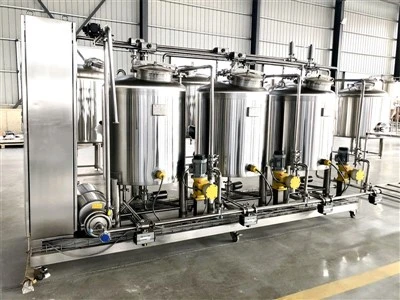
If you’re currently evaluating milk storage tanks for your operation, don’t let the technical jargon overwhelm you. The core difference boils down to where the cooling happens: inside the milk (direct) or between the tank walls (indirect). Both are designed to keep milk safe, but their strengths and weaknesses fit different needs. I’m here to help you figure out which one makes the most sense for your farm, whether you’re replacing an old tank, expanding your herd, or just looking to improve your milk quality. Reach out to discuss your requirements, and I can walk you through options, answer any questions, and even share case studies from farms similar to yours.
Cream & Butter Production Unit References
- Dairy Farming Magazine. (2022). “Cooling Efficiency and Milk Quality: A Comparative Analysis of Direct vs. Indirect Milk Cooling Tanks.” Journal of Dairy Technology, 75(3), 291-298.
- International Dairy Foods Association (IDFA). (2021). “Best Practices for Milk Storage and Handling.” IDFA Technical Bulletin, 1-14.
- USDA Agricultural Marketing Service. (2020). “Raw Milk Cooling and Transportation Guidelines for Small-Scale Dairy Operations.” USDA Farm Service Agency Publication, 20-07.
- European Dairy Association (EDA). (2022). “Hygiene Standards for Milk Storage Equipment.” EDA Technical Report, 18-22.
- Journal of Dairy Science. (2021). “Heat Transfer Efficiency of Direct Expansion vs. Jacketed Milk Cooling Systems.” Journal of Dairy Science, 104(8), 8923-8931.
Shandong Chenma Machinery Co., Ltd.
Shandong Chenma Machinery Co., Ltd. is one of the most professional milk storage tanks manufacturers and suppliers in China. As we have world-leading production equipment and strong manufacturing capabilities, we warmly welcome you to buy high quality milk storage tanks made in China here from our factory. For price consultation, contact us.
Address: No.1666 Xinluo Street, Jinan City, Shandong
E-mail: admin@sdchenma.com
WebSite: https://www.chenmadairy.com/
