If you’ve ever been on the hunt for a compact electric forklift—say, for a tight warehouse aisle, a loading dock with limited space, or a small e-commerce fulfillment center—you’ve probably stumbled on 48V models more than a few times. And if you’re like most ops managers and business owners, the first question you’ll fire off to any supplier (including us) is: “What can this thing actually lift?” Electric Small Forklift

Let’s cut to the chase—there’s no one-size-fits-all answer here. But as a supplier that’s been building and selling these small 48V units for years, I’ve heard all the confusion: people assume a higher voltage means way more lifting power, or write off a 48V as too weak for anything beyond a few boxes, or mix up load capacity with other specs like travel speed or battery life. Today I’m breaking this down straight, no jargon, so you know exactly what a 48V electric small forklift can handle, how it works, and what to watch for before you buy.
First, let’s clear up a super common mix-up: voltage vs. load capacity. A lot of folks connect “48V” directly to how much weight the lift can haul, and honestly, that’s not totally wrong—but it’s not the whole story, either. Voltage is just the electrical “push” that powers the motor. For small forklifts, which are usually under 5,000 lbs total weight themselves, 48V is the sweet spot: it’s powerful enough to move heavy loads without the bulk or cost of higher-voltage units (like 80V or 24V, which is often too anemic for regular use). But your load capacity isn’t set in stone just because it’s a 48V. It depends on three big factors: the motor’s wattage, the forklift’s own weight, and how it’s built for lifting, not just driving.
Let’s get into the real numbers that matter here, from what we see on our showroom floor and with the units we ship out. Most standard 48V electric small forklifts (the ones that fit through 36-inch aisles, perfect for narrow stock rooms) have a rated load capacity right around 3,000 to 4,500 lbs. Wait, that’s a big range, right? Yeah, and here’s why: a compact 48V pallet jack style (the super common, walk-behind ones) will usually hover around 3,000 lbs max. Then the slightly bigger ride-on 48V units—still small enough to fit into tight docks, not full-sized—can push up to 4,500 lbs. But that’s the “rated” capacity, which is the number the manufacturer guarantees when the forklift is in perfect shape, the load is centered dead on the forks, and you’re not lifting it way up off the ground.
Now, the “but wait” part, because this is where people get tripped up. That 3,000 or 4,500 lbs number is only for loads that are balanced, at fork height (usually around 8 feet max for these small units), and not any bigger than the forks themselves. If you try to lift a 4,000 lbs load that’s sticking out past the forks, or lift it 12 feet high, or run the forklift up a ramp while carrying it? That number drops fast. We’ve had customers come back saying their 48V “only lifted 2,500 lbs” and when we checked, they were trying to haul a wooden pallet full of steel parts that hung a foot over the edge of the forks. That’s a no-no. Load capacity isn’t just how much weight the motor can pull—it’s how the forklift’s frame, lift chains, and stability system handle that weight, too. Small forklifts don’t have the big counterweights that full-size diesel forklifts do, so balance is make-or-break.
Let’s talk about how that 48V system ties into all this, because it’s not just a random number. A 48V motor for these small units is usually 3 to 5 kilowatts (kW) when it’s running for lifting power. To put that in perspective, a 1kW motor is enough to power a space heater, so 3kW is like three of those cranking out force to lift a pallet. But if the motor was 24V, that same 3kW would be way less power, right? Because voltage equals force multiplied by current, so higher voltage means you get more lifting oomph without cranking up the current too much (which would overheat the wires or batteries). That’s why 48V is the go-to for small forklifts: it hits that sweet spot between power, battery size, and cost. You don’t need 80V for a 4,000 lbs load, and 24V would struggle to consistently move that weight without dying mid-pallet.
Now, let’s cover the real-world use cases, because that’s what matters most. If you’re a retail store moving stock, a small e-commerce warehouse shifting boxes, a construction site hauling small parts, or a factory moving pallets of packaged goods? A 3,000 lbs rated 48V forklift is perfect. Most standard pallets of canned goods, clothing, or small electronics run around 2,500 lbs, so you’re leaving some room for a little extra, no problem. If you’re moving slightly heavier stuff—like pallets of concrete blocks, small machinery parts, or bulk raw materials—then the 4,500 lbs rated 48V ride-on unit is your guy. We’ve had clients use those to move engine parts for auto shops, for example, and they do it all day without issues, as long as they’re keeping loads balanced.
But let’s get honest about the limits. You’ll never see a 48V small forklift lifting 10,000 lbs. That’s not what it’s built for. These are for tight spaces, not heavy-duty yard work. If you’re needing to move full-size loads of 8,000 lbs, you’d need a bigger, higher-voltage unit, not a small 48V. That’s a common mistake: buying a compact forklift to save space and then getting frustrated it can’t handle full-size loads. We always tell customers to match the unit to their actual loads, not what they think it should do.
Now, what about battery life and how that ties into load capacity? A lot of people ask: if I’m lifting heavier loads, will that drain the battery faster? Short answer: yes, a little. If you’re hauling 4,000 lbs vs. 2,500 lbs, the motor works a bit harder to lift the heavier weight, so you might get 10-15% less run time per charge. But since these small forklifts usually run off lithium-ion batteries (we use 48V 100Ah lithium batteries for most of our units), a full charge still gives you 6-8 hours of continuous use, even with the heavier loads. That’s more than enough for a standard workday—no need to swap batteries mid-shift, which is a huge win for small operations that don’t have extra battery carts lying around.
Wait, let’s also clear up a myth: electric forklifts, including 48V ones, are just as strong as gas or diesel, but for smaller loads. A gas forklift of the same size would have roughly the same load capacity, but it’s louder, emits fumes, and needs more maintenance. Our customers tell us the 48V electric units require almost no upkeep—no oil changes, no filter replacements, just a quick check of the battery every few months. That’s a big deal for small businesses that don’t have a big maintenance team on staff.
Now, what do you need to check before you pick a 48V forklift for your space? Let’s break down the things that affect actual load capacity, beyond the “rated” number on the spec sheet. First, fork length: shorter forks are for tight spaces, but longer forks can distribute weight better, so you can lift a little more. Second, lift height: if you’re only lifting pallets 6 feet high, you can hit that full 4,500 lbs. If you’re lifting 15 feet high, that number drops to around 3,500 lbs, because the forklift’s center of gravity shifts when you lift higher. Third, tire type: solid rubber tires (which are standard for our warehouse units) give better stability, so you can safely lift more than if you had air-filled tires, which can slip a little when loaded.
We’ve had a few customers come to us after buying a cheap 48V forklift from a no-name supplier, and they get way lower load capacity than the spec sheet says. Why? Because some cut corners: they use thinner lift chains, smaller motors, or lighter frames to save money, so even if it says 4,500 lbs, it can’t safely handle that. That’s why buying from a reputable supplier matters—we test every unit before it leaves our warehouse, so the rated capacity is exactly what you get, no fine print.
Let’s wrap this up with a quick, real example from one of our clients. A small craft brewery in Portland hit us up last year. They needed a forklift to move pallets of hops and empty kegs—each full keg of beer is around 1,600 lbs, so two kegs on a pallet is 3,200 lbs. They were looking at a used gas forklift until they saw our 4,500 lbs 48V ride-on. It fit through their narrow loading dock doors, was way quieter in their production area, and could easily move those 3,200 lbs pallets all day. They’ve had it for 18 months now, no issues, and say they’d never go back to gas. That’s exactly what a 48V small forklift is for: matching your specific needs, not overbuying for jobs you don’t have.
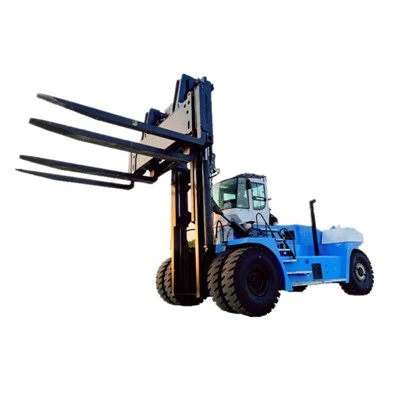
At the end of the day, the load capacity of a 48V electric small forklift isn’t a random number—it’s a balance of voltage, motor power, build quality, and how you use it. For most small to medium operations, that 3,000 to 4,500 lbs range covers almost every pallet they need to move. If you’re shopping around and not sure which one fits your actual load sizes, don’t guess—reach out and chat with someone who knows these units inside and out. Whether you need a walk-behind for small stock rooms or a ride-on for a tight loading dock, we can help you pick the right 48V forklift that fits your space and your budget. Don’t waste time on units that are too weak or too big—let’s match you to what you actually need.
Attachment References:
- Material Handling Industry Association. (2022). Compact Electric Forklift Load Capacity Guidelines for Narrow Aisle Operations.
- Global Electric Vehicle Association. (2021). Voltage vs. Performance: Small Industrial Electric Lift Truck Specifications.
- OSHA. (2020). Forklift Stability and Load Capacity Standards for Electric Industrial Trucks.
- Industrial Truck Association. (2023). Load Rating Definitions for Walk-Behind and Ride-On Small Forklifts.
Fujian SOCMA Machinery Manufacture Co., Ltd.
Fujian SOCMA Machinery Manufacture Co., Ltd. is one of the most professional electric small forklift manufacturers and suppliers in China. We warmly welcome you to buy customized electric small forklift made in China here from our factory. If you have any enquiry about cooperation, please feel free to email us.
Address: Taiwanese Investment Area, Quanzhou, Fujian, China
E-mail: marketing@socmamarketing.com
WebSite: https://www.socma-forklift.com/
