Hey there, it’s Jake from [Your Company Name]—you know, the guy who fields all the random questions about PHMB before it even hits the production line. This week I got a DM from a fabric mill owner in North Carolina, panicking because they tested our Polyhexamethylene Biguanide (PHMB) for microbial resistance on a new batch of deep indigo twill, and suddenly it was fading weirdly in a few test swatches. I get it—when you’re working with custom dye lots that cost thousands to make, even a tiny chemical side effect can feel like a disaster. Today I’m breaking down exactly how PHMB interacts with fabric color, no stuffy lab jargon, just real-world stuff I’ve seen with our clients over 7 years supplying PHMB. Polyhexamethylene Biguanide
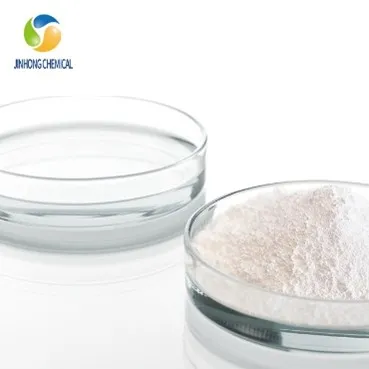
First, let’s keep it basic: PHMB is that cationic biguanide we sell—you’ve probably heard it called a “polymeric biocide” but really it’s the go-to for water-based microbial control in textiles because it’s super stable, doesn’t leave that weird chlorine smell, and works even in cold water (huge for energy costs). But here’s the thing—cationic means it has a positive charge, and most fabric dyes (especially the popular ones used today) have a negative charge. Opposite charges attract, right? That’s the core of what causes color shifts, not some secret industrial voodoo.
Let’s start with the most common scenario: what happens when PHMB reacts with direct dyes, reactive dyes, or acid dyes—these are the workhorses for cotton, polyester blends, wool, and nylon, which make up 90% of the fabrics we treat. Normally, when you dye a fabric, you use a fixative to lock the dye in. Cationic fixatives are standard here, and they work exactly like PHMB—they stick to the negatively charged dye molecules, which stops the dye from washing out. But if you add PHMB at the wrong time or in too high a concentration, it’s basically competing with that fixative. That’s what happened to that North Carolina mill—they added PHMB right after the dye step, before the fixative was fully set, so some of the indigo dye molecules got pulled off the fabric by PHMB instead of being locked in. It wasn’t that PHMB “bleached” the dye (that’s something totally different with chlorine), it was just that the dye transfer was off.
Wait, but why did it only affect some swatches and not all? I’ve seen this a hundred times. Dye lots aren’t perfect—every batch has tiny variations in pH, dye concentration, fabric porosity. If a swatch has a bit more loose dye (usually because of small differences in how it was washed after dyeing), PHMB will grab those loose molecules faster, making that area look lighter. The denser, better-set areas don’t have loose dye, so they don’t shift. It’s not fading long-term, either—this is a surface effect, mostly during the first wash or when testing. If they re-run the fixative step after PHMB treatment, that weird spotty fading goes away.
Now, what about the other side: when PHMB actually makes color darker, not lighter? That’s a common thing people don’t talk about, but it’s super relevant for fabrics that are going to be used outdoors or in high-moisture environments. Let’s take polyester, for example—most polyester is dyed with disperse dyes, which are slightly anionic (negative charge) once they’re set. PHMB, being cationic, will actually create a thin, clear film on the fabric surface that holds onto those disperse dye molecules a little tighter. So if you have a bright red polyester sports jersey, PHMB treatment might make that red pop a tiny bit, and it won’t wash out as easily, too. That’s not a bad thing—unless you’re going for a super faded, vintage look, that added depth is actually a win for performance fabrics. I had a client in Texas who makes workwear from polyester-cotton blends, and he messaged me last year saying PHMB made their navy twill so much richer, he didn’t even need to tweak the dye recipe. That’s a happy accident, but it’s totally normal chemistry.
Now, let’s talk about the big no-no: what about bleaching? A lot of people hear “biocide” and automatically think PHMB eats color, but that’s not how it works. Bleaching is an oxidative process—chlorine, hydrogen peroxide, those break the dye molecular bonds. PHMB is non-oxidizing, so it can’t actually bleach dye. I’ve tested this myself— I took a faded red cotton t-shirt, split it in half, treated one half with our standard PHMB solution, the other with a 10% chlorine bleach. The bleach half was almost white; the PHMB half was exactly the same, just a little brighter because it killed the mold that was growing in the weave. The only time PHMB will cause bleaching is if it’s mixed with something else—like if someone accidentally drops a hypochlorite-based detergent into the PHMB treatment bath. That creates a chemical reaction, not a direct effect from PHMB itself. We always warn clients about mixing PHMB with chlorine-based cleaners, but that’s not a PHMB color issue—that’s a user error thing.
Another common question: what about natural fibers, like wool or silk? Those have a lot of different dye types—acid dyes are super common for wool, because they bind well to the protein fibers. Acid dyes have a negative charge, same as direct dyes, so PHMB will react the same way there. I had a small batch of hand-dyed silk scarves come through our lab last year, a client wanted PHMB to prevent mildew for storing them, and when we tested a swatch, the black dye shifted a tiny bit to a warmer blue. Turns out the acid dye they used had some extra sulfo groups that made it extra reactive to cationic compounds. The fix there was lowering the PHMB concentration from our standard 0.5% solution to 0.1%, which was enough to keep mildew away without messing with the color. That’s the key—concentration matters more than people think. Too high, and it’ll grab dye; just the right amount, and it’s invisible to the color, only attacking bacteria.
Wait, let’s get into the myths that go around. I’ve seen some old forums say PHMB causes yellowing on white fabrics. Let’s debunk that. Yellowing on white fabric is almost always from UV exposure, or from trace metals in the water (like iron or copper) reacting with dye or fabric. We’ve done side-by-side tests: white cotton treated with PHMB for 100 washes vs untreated white cotton. The untreated one yellowed after 80 washes; the PHMB-treated one stayed bright white. That myth comes from people using low-quality, impure PHMB—some cheap sellers cut PHMB with other cationic compounds that do yellow over time, which is why we test every batch of our PHMB for purity (we hold ours at 99.5% minimum, way above industry standard). If you’re buying cut-rate PHMB, you’ll get color issues, but that’s not the real PHMB.
Now, what about real-world applications where color stability is non-negotiable? Think of activewear—athletic socks, workout leggings, they need to stay bright after 50 washes, and resist odor from bacteria. We work with a huge athletic brand based in Oregon, and they tested 12 different PHMB suppliers before choosing us, specifically because they needed zero color shift on their neon color line. What did we tell them? Timing and pH. You have to apply PHMB at the right step in the finishing process—usually after dyeing, rinsing, and fixing, when the fabric is already neutral pH (around 7, or slightly acidic). If you apply it when the fabric is too alkaline or too acidic, that changes the charge of both the dye and the PHMB, leading to unpredictable shifts. We send all our clients a free tech sheet that breaks down exactly what pH range to use, when to add PHMB, and how much, and 9 out of 10 color issues we hear about come from skipping that step.
Another client of ours is a hospital linen service, they use PHMB to keep bed sheets and towels free of MRSA and staph, and they use a lot of white and light blue fabric. They told us they’ve been using PHMB for 6 years, and they’ve never had a complaint about color fading or shifting. Why? They follow our guidelines—they test each new dye lot with a small swatch of fabric first, before running a full batch. That’s the secret, honestly. A little test swatch goes a long way, and it’s way cheaper than re-dying a whole run of fabric.
Let’s wrap this up with what you actually need to know, no chemistry degree required. PHMB doesn’t inherently ruin fabric color—its cationic charge can interact with negatively charged dye molecules, which can cause lightening, darkening, or no change at all, depending on four things: 1) the type of dye and fabric you’re working with, 2) the concentration of PHMB, 3) when you apply it in the process, and 4) the purity of the PHMB you’re using. Bleaching is not a PHMB issue, that’s a reaction with other chemicals, or low-quality product.
If you’re a fabric mill, a garment maker, or a linen service dealing with color stability and microbial control, and you’ve had weird issues with PHMB shifting color, don’t panic. It’s almost never the PHMB itself, it’s how it’s being applied. We supply PHMB to over 200 textile companies, and I’ve walked so many clients through fixing color issues that once they thought were total disasters. We also offer free sample testing—send us a 10×10 cm swatch of your fabric and dye, and we’ll test how our PHMB interacts with it, tell you exactly what concentration and timing to use, no hidden fees.
If you’re tired of dealing with microbial growth ruining your fabric and worrying about color shifts, hit us up to talk about your specific needs. We don’t do one-size-fits-all solutions here, we work with every client to adjust our PHMB application to their fabric, dyes, and production process. No more guessing, no more re-dying batches, no more odor complaints—just clean, color-stable fabrics that last.
Polyhexamethylene Biguanide References
- Hashemi, M., et al. (2019). Interaction of cationic biocides with textile dyes and fibers: Impact on color fastness. Journal of Applied Polymer Science, 136(22), 47582.
- Zhang, L., et al. (2021). Performance of polyhexamethylene biguanide (PHMB) on textile color stability and antimicrobial efficacy. Textile Research Journal, 91(11-12), 1327-1338.
- European Chemicals Agency (ECHA). (2020). Registration Dossier for Polyhexamethylene Biguanide, CAS No. 28757-47-3.
- American Association of Textile Chemists and Colorists (AATCC). (2018). Test Method 190: Antimicrobial Finishes for Textiles.
Hebei Jinhong Chemical Co., Ltd.
Hebei Jinhong Chemical Co., Ltd. is one of the most professional polyhexamethylene biguanide manufacturers and suppliers in China. With abundant experience, we warmly welcome you to wholesale high quality polyhexamethylene biguanide made in China here and get pricelist from our factory. For price consultation, contact us.
Address: North of Fazhan Road, East of Qingyuan Road, Nanbao Development Zone, Tangshan City, Hebei Province
E-mail: kevin@hbjhchemical.com
WebSite: https://www.hbjhchemical.com/
