If you’ve ever spent time around a mining processing plant, a construction site with heavy earthmoving, or a wastewater treatment facility that handles thick, viscous material, you know slurry pumps are the unsung workhorses keeping operations moving. I’ve been in the slurry pump spare parts business for over 12 years, and one question I get asked more often than any other is: “Why does the suction liner matter so much? I just need a replacement part, not another thing to overcomplicate.” Slurry Pump Spare Parts
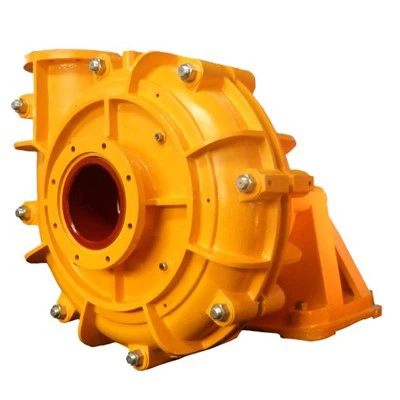
I get it. When you’re mid-shift and a pump breaks down, the last thing you want is to sit and research a tiny part that looks like it doesn’t do much. But let me tell you—ignoring the suction liner is how you end up with unplanned downtime that costs you thousands (or tens of thousands) of dollars in lost production. In this post, I’m going to break down exactly what a suction liner does, why it’s non-negotiable for your pump, and how as a supplier, we’ve seen firsthand how the right liner saves our customers time and money.
First, let’s get the basics out of the way. For anyone who doesn’t work with slurry pumps every day: a centrifugal slurry pump has two main internal wear components—an impeller and a liner. The suction liner is the part that lines the suction side of the pump casing, right where the slurry enters the pump. It’s not the biggest part, and it’s not the one spinning at high speeds, but it sits in one of the most critical areas of the pump. The space between the suction liner and the impeller eye (the center of the impeller where slurry is pulled in) is called the running clearance. That gap is measured in millimeters, but it’s the make-or-break spot for your pump’s performance.
Let’s start with the most obvious function: it maintains that crucial running clearance. If you think about how a centrifugal pump moves slurry, it works by creating a low-pressure zone at the impeller eye, which pulls slurry in from the suction side. The impeller then flings that slurry outward using centrifugal force, which builds pressure to push it through the discharge pipe. If there was no suction liner, and the impeller was directly next to the casing, there would be massive gaps between the impeller and the casing walls. Slurry doesn’t just go where you want it to—it’s thick, abrasive, and will leak through any gap. The suction liner acts as a physical barrier that keeps the space between the impeller eye and the casing consistent. Too big a gap, and slurry leaks back from the high-pressure discharge side to the low-pressure suction side. That’s called recirculation, and it’s one of the biggest performance killers for slurry pumps.
I remember a mine customer out in Western Australia reaching out to me two years ago. Their pump’s suction liner had worn down so much from abrasive iron ore slurry that the running gap was almost triple what it should be. They told us their pump was only moving 60% of the slurry it was rated for, and they were losing 12 hours of production a week because they had to overwork the pump to compensate. By replacing the worn suction liner with a precision-machined one, their running clearance went back to factory specs. Within a month, they were back to 95% of their rated flow, and their weekly downtime dropped to just 2 hours for scheduled maintenance. That’s the difference the suction liner makes.
Next up: it protects the pump casing. The pump casing itself is a heavy, metal structure that’s built to withstand the pressure of moving slurry, but it’s not designed to be the sacrificial part. Slurry is full of hard particles—silica, coal, iron ore, or construction debris—that act like sandpaper inside the pump. If there was no suction liner, those abrasive particles would be bouncing directly off the casing’s suction side every time the pump runs. The suction liner is a wear part, which means it’s designed to take that beating instead of the more expensive casing. Think of it like the brake pads on a truck—you replace the pads regularly, not the rotors, because pads are made to wear down faster. For slurry pumps, the suction liner is the pad protecting the casing rotor (wait, not the rotor—casing, right) wait, let’s correct that. The pump casing is like the wheel hub, and the suction liner is the brake pad that takes the abrasion. If you don’t replace the suction liner when it’s worn, you’ll end up with a damaged casing that costs 5–10 times more to replace than a liner.
I had a customer in the construction industry a few years back who tried to cut corners. He waited six months longer than he should have to replace his suction liner, figuring he was saving money. But what he didn’t realize was that the worn liner’s metal edge was grinding against the casing’s suction side. By the time he finally ordered a new liner, he needed a new casing too. The total cost was $18,000, whereas replacing the liner on schedule would have been less than $2,000. That’s a $16,000 mistake all because he skipped a small part.
Third function: it improves pump efficiency. I touched on this with the recirculation earlier, but let’s dive deeper here. Slurry pumps are not 100% efficient anyway—they have to move thick, viscous, abrasive material, which takes more energy than moving water. But when the suction liner is worn, that efficiency drops even more. Recirculation of slurry from the high-pressure discharge back to the low-pressure suction side means the pump is working against itself. It’s using energy to push slurry out, only for some of that slurry to leak back in, so it has to work harder to move the total amount you need.
We track efficiency data for all our customers, and on average, a suction liner that’s 2mm over the recommended clearance can reduce pump efficiency by 10–15%. For a pump moving 200 cubic meters of slurry an hour, that means you’re using 10–15% more electricity than you need. If your electricity cost is $0.10 per kWh, that’s an extra $500–$750 a day in energy costs for no reason. Multiply that by a year, and that’s $182,500–$273,750 in unnecessary expenses. The suction liner doesn’t just affect performance—it affects your bottom line in energy costs too.
Another function you might not think about: it helps prevent cavitation. Cavitation is a big problem for pumps, especially slurry pumps. Cavitation happens when the low pressure at the impeller eye gets so low that the slurry’s vapor pressure drops, forming small bubbles. When those bubbles move to the higher-pressure area of the pump, they collapse, creating tiny shock waves that damage the impeller and casing. Wait—how does the suction liner play into this? Because the suction liner’s design can help stabilize the pressure at the impeller eye. A properly fitted suction liner creates a consistent pressure zone around the impeller eye, which prevents the low pressure from dropping too much in specific spots. If the liner is worn, the pressure becomes uneven, making cavitation more likely.
I saw this firsthand at a coal processing plant in Ohio a few years ago. Their pump kept failing impellers every 3 months, which was way shorter than the typical 6-month lifespan. After inspecting the pump, we found the suction liner was worn on one side, so the pressure at the impeller eye was uneven, creating cavitation in that spot. Replacing the liner with a correctly aligned one fixed the cavitation issue, and the impeller lifespan went back to 6 months. That’s another example of how a small liner prevents costly damage to more expensive parts.
Now, not all suction liners are the same. As a supplier, I’ve seen a lot of cheap, low-quality liners that wear out fast, and that’s why we focus on precision-engineered liners made from high-abrasion-resistant materials. The best suction liners are made from materials like high-chrome iron, rubber, or polyurethane, depending on the type of slurry you’re handling. For example, if you’re moving very abrasive material like iron ore, high-chrome iron liners last longer. If you’re moving corrosive slurry like wastewater, rubber or polyurethane liners are better because they resist corrosion. And precision is key—even a 0.5mm difference in machining can throw off the running clearance, leading to all the problems we talked about: recirculation, low efficiency, cavitation, and casing damage.
I always tell my customers: when you order suction liners, don’t just go for the cheapest option. Get the right material for your application, and make sure they’re machined to the exact specs of your pump model. We keep liners in stock for all the major pump brands—Warman, slurry pump spare parts, we work with all the popular models. Our team knows exactly what material works for different slurry types, and we can help you pick the right liner for your needs.
Another thing I want to mention is maintenance. A lot of customers only replace suction liners when the pump stops working, but that’s not the right approach. You should inspect your suction liner during scheduled maintenance, which usually happens every 1000–2000 operating hours, depending on the slurry. Measure the running clearance regularly, and replace the liner when it’s worn to 10–15% over the recommended gap. That way, you avoid unplanned downtime, protect your casing and impellers, and keep your pump running at peak efficiency.
I know maintenance takes time, and when your pump is running, you don’t want to shut it down. But trust me—scheduled liner replacement is way better than the alternative. We had a customer in Canada who tried to run a suction liner for 3000 operating hours, which was double the recommended time. His pump seized up completely, and it took 18 hours to tear it down and replace all the worn parts. That 18 hours of downtime cost him over $50,000 in lost production. If he had replaced the liner at 1500 hours, the total cost would have been less than $1,000.
At the end of the day, the suction liner is one of those parts that’s small in size but huge in impact. It’s not something you can ignore, even if it looks unimportant. It maintains critical clearances, protects your expensive casing, keeps your pump efficient, prevents cavitation, and saves you a ton of money in the long run.
As a supplier, our goal is to make sure our customers have the right suction liners when they need them, no cutting corners, no guesswork. We’ve been in this business long enough to know that the best equipment isn’t just about big pumps—it’s about the spare parts that keep them running. If you’re dealing with a pump that’s underperforming, or you need to replace worn suction liners, reach out to our team. We’ll help you pick the right liner for your application, offer competitive pricing, and make sure you get it quickly so you can get back to work.
Don’t let a worn suction liner cost you downtime, lost production, or expensive repairs. A small investment in the right liner pays off big time. Let’s connect and get your pump running at peak performance.
Sand Pump References:
- Hydraulic Institute. (2020). Pump Lifetime Optimization: A Guide to Centrifugal Pump Maintenance and Performance.
- Slurry Pump Technology Association. (2021). Wear Component Functions and Maintenance for Centrifugal Slurry Pumps.
- Mining Equipment Manufacturers Association. (2019). Efficiency and Downtime Costs in Mineral Processing Slurry Systems.
- Rubber and Plastics Industry Association. (2022). Material Selection for Slurry Pump Wear Components.
- Cavitation Control Association. (2020). Preventing Cavitation in Centrifugal Pumps Through Proper Clearance Maintenance.
Shijiazhuang Ruite Pump Co., Ltd.
Shijiazhuang Ruite Pump Co., Ltd. is one of the most experienced slurry pump spare parts manufacturers and suppliers in China. Please rest assured to wholesale high quality slurry pump spare parts made in China here from our factory. For price consultation, contact us.
Address: Majuan village, Nandong town, Gaocheng, Shijiazhuang, China
E-mail: info@ruitepump.com
WebSite: https://www.rtslurrypump.com/
