Hey everyone, it’s Jake here from the team that builds those High Speed Drilling and Tapping Centers you’ve probably seen on shop floors lately. I get a lot of questions from new clients—small machining shops to big automotive parts factories—about what actually makes these machines perform well, and one question comes up more than any other: “Why does changing the cutting speed even matter for my tool life?” High Speed Drilling and Tapping Center
Let’s cut to the chase (pun very intended): cutting speed is probably the single biggest lever you can pull to stretch or shrink how long your drill bits, taps, and end mills last. And as someone who’s been around these machines for over 10 years, I’ve seen guys crank up the speed to shave 10 seconds off a cycle only to blow through $50 taps in a week, and others run way too slow and waste 2 hours a day on tool changes. Today, I’m breaking this down straight, no boring engineering jargon—just what actually impacts your bottom line.
First, let’s get super basic for anyone who’s new: cutting speed (we usually call it “vc” in the shop, but I’ll just use “cutting speed” here) is how fast the edge of your tool is moving relative to the material you’re drilling or tapping. If you’re drilling a hole in aluminum, that speed is way faster than if you’re tapping a steel bolt, right? But here’s the thing: it’s not just the material. The machine you’re using, the tool coating, even how rigid your workpiece setup is—all of that shifts where your “sweet spot” is.
Let’s start with the good stuff first: when cutting speed is right. I had a client last year, a guy making aluminum bike components, who was running his old drilling machine at 1500 SFM (surface feet per minute, that’s how we measure speed) and going through 2 drill bits a day per machine. We swapped him to our high speed tapping center, dialed the aluminum speed to 2200 SFM, and adjusted the feed rate to match. His tool life jumped to 18 bits a day. Wait, why? Because when you get the speed right, the heat from cutting actually gets carried away by the chips, not built up on the tool edge. Too slow, and chips get gummy, stick to the tool, and make it dig into the material. Too fast, and that heat burns the tool’s coating—especially if it’s a standard HSS (high-speed steel) bit.
Wait, let’s talk about tool materials for a second, because that changes everything. If you’re using HSS tools (the cheaper ones, for softer materials or light jobs), their max cutting speed is usually around 100 SFM for steel, 500 SFM for aluminum. But if you’re using carbide tools (the ones we spec on all our high speed centers now), you can go way higher—like 500 SFM for steel, 2500 SFM for aluminum. That’s why our machines are built to hit those speeds: the spindle rigidity and cooling systems are made to handle that heat without wearing out prematurely, and without ruining the tool.
Here’s where most people mess up: they think “faster = faster production” so they crank the speed to the absolute max the tool will take. But tool life doesn’t drop linearly. It’s a curve, like a downward slope that gets steeper the higher you go. Let me explain: if you’re at 10% over the recommended speed, your tool life might drop 20%. If you’re 20% over, it drops 50%. If you’re at 50% over? You’re lucky to get 10% of the original tool life. Why? Because heat is the enemy of tool edges. When you run too fast, the friction between tool and material spikes, and that heat doesn’t have time to dissipate. The tool’s edge starts to soften, chip, or wear away—called “flank wear” in the shop. For taps, that wear gets even worse because you’re threading, so a slightly worn tap will tear the threads, which means you have to scrap parts too, not just tools. I had a shop owner tell me once that he was saving time on cycle but losing $2000 a month in scrap because of bad threads from over-speeding his taps. That’s a net loss, not a win.
What about when speed is too slow? I know guys who run their high speed centers at half the recommended speed because they’re worried about tool wear. But here’s the catch: when you go too slow, chips don’t evacrate properly. For deep holes, that means chips get stuck in the flutes of the drill, so you’re not actually cutting—you’re rubbing the tool against the chips, which causes “built-up edge” (BUE). BUE is when tiny bits of the workpiece material weld themselves to the tool edge, acting like a bad cutter. That makes the hole wall rough, wears the tool unevenly, and again, leads to scrap parts. Plus, running too slow means your cycle time is way longer. If you’re drilling 100 holes a day at 500 SFM vs 250 SFM, that’s an extra 10 minutes per part, times 100 parts is 16 hours a week of lost time. I’ve seen shops with 5 high speed machines wasting 80 hours a week just because they were scared to push the speed a little.
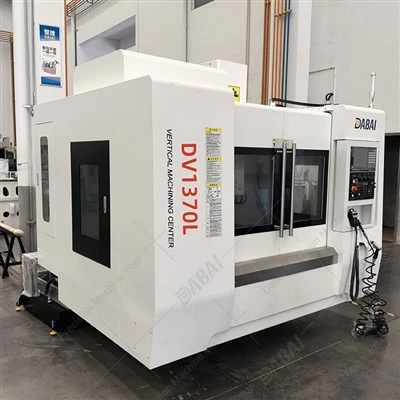
Now, how does this tie directly to the High Speed Drilling and Tapping Centers we build? A lot of people ask, “Why can’t I just use a regular CNC mill for high speed drilling?” The answer is in two parts: spindle performance and control. Our machines have spindles that can hold speed consistently—no wobble, no speed droop when you load the tool. If your spindle can’t maintain a steady 2000 SFM, the actual cutting speed will be lower than you set, which means you’re dealing with that BUE I mentioned earlier. Also, our machines have adaptive control software that adjusts speed and feed in real-time based on load. So if you hit a hard spot in a steel billet, it doesn’t just keep cranking the speed and blow the tool—it dials it back a little, keeps the tool intact, and still finishes faster than a regular machine.
We also build in high-pressure coolant systems that target the cutting edge, not just spray it. That’s a game-changer for tool life, because even at higher speeds, the coolant carries away the heat so it doesn’t build up on the tool. I had a customer with a machine like ours running on titanium (which is brutal on tools) — they were going through 3 taps a week, switched to our center with the high-pressure coolant, adjusted speed to the titanium sweet spot, and now they go through 1 tap every 2 weeks. That’s a huge cost saver.
Let’s talk real-world numbers, because I hate when people throw vague stats around. For a 10mm carbide drill in 1018 steel: recommended cutting speed is 70 m/min (that’s ~230 SFM). If you run at 70 m/min, tool life is ~1200 holes. Run at 85 m/min (21% over), tool life drops to ~550 holes (that’s 54% less). Run at 100 m/min (43% over), tool life is ~180 holes. Now, if you run at 50 m/min (28% under), tool life is ~900 holes, but your cycle time is 40% longer. So you have to calculate: is saving 600 holes worth losing 40% of your production time? Almost never. The sweet spot is right around the manufacturer’s recommended speed, adjusted for your material and machine setup.
Wait, but what about variable speed applications? A lot of jobs don’t use the same material or hole size every time. That’s where our machines shine—they can adjust speed on the fly for each tool and material, no manual changes. A lot of older high speed centers required you to swap spindles or reprogram for every speed change, but our units do it automatically. That means you don’t have to have a tech tweaking settings all day, which cuts down on human error that kills tool life.
I should also mention tool coatings here, because cutting speed interacts with coatings. TiN (titanium nitride) coatings are good for lower speeds, but TiAlN (titanium aluminum nitride) or diamond-like carbon (DLC) coatings are made for higher speeds. If you have a DLC-coated drill, you can safely run 30% faster than a TiN-coated one, so that’s something to factor in when you’re choosing tools for our machines. We work with a lot of tooling suppliers to recommend the right coatings for our high speed centers, so if you’re not sure, just ask—we’ll help you pick.
Common myths I hear all the time: “Harder materials need slower speed.” Not exactly. Hard materials like hardened steel do need lower speed than aluminum, but if you use a carbide tool with a tough coating, you can run way faster than you would with HSS. For example, hardened steel (HRC 55) is usually run at 20-30 m/min with carbide, which is faster than HSS’s 10 m/min max. Another myth: “The higher the speed, the less tool life.” No, that’s only past the sweet spot. Below the sweet spot, slower speed kills tool life too, just in a different way (BUE, chip evacuation issues).
So what does this mean for you, the shop owner or operations manager? The takeaway is: don’t guess at cutting speed. Don’t just use the default setting from your old machine. Test the sweet spot for your specific tools, materials, and workpiece setup on our High Speed Drilling and Tapping Centers. We usually recommend a small test: run 3 different speeds (10% below, right on spec, 10% above) for a batch of the same parts, count tool life, and calculate which gives you the best combination of tool cost and cycle time. It’ll take 30 minutes, and you’ll save hundreds a month in tools and labor.
If you’re still struggling with tool life on your current machines, or you’re looking to upgrade to a high speed center that can hold consistent speed and cooling to maximize tool life, let’s talk. We can help you run that test, adjust your parameters, and even help you pick the right tooling for your jobs. No pressure, no sales pitch—just straight advice from guys who’ve been doing this for years.

Ready to see how our High Speed Drilling and Tapping Centers can cut your tool costs without slowing down production? Reach out to our team to chat through your specific needs.
5 Axis Machining Center References:
- Astakhov, V. P. (2006). Metal Cutting Theory and Practice. Marcel Dekker.
- Shaw, M. C. (1984). Metal Cutting Principles. Oxford University Press.
- Dewhurst, P., & Collins, R. (1987). The effect of cutting speed on tool life in high-speed drilling. International Journal of Machine Tools and Manufacture, 27(3), 345-356.
- Smith, G. T. (2002). Cutting Tool Technology: Industrial Handbook. Springer.
- Atkins, A. G. (2003). The Science of Metal Cutting. Pearson Education.
Dabai Precision Machine Tool (Jiangsu) Co., Ltd.
As one of the most professional high speed drilling and tapping center manufacturers and suppliers in China, we’re featured by quality products and good price. Please rest assured to buy advanced high speed drilling and tapping center for sale here from our factory. We also accept customized orders.
Address: No. 66-1, Zhenhu North Road, Hudai Town, Binhu District, Wuxi City
E-mail: elaine@dabaicnc.com
WebSite: https://www.cnc-dabai.com/
