If you’ve ever walked through a manufacturing floor, you’ve probably seen custom stamped parts: precision-cut brackets, chassis mounts, electrical contacts, and even small structural components that hold everything from cars to medical devices together. For anyone specifying these parts for a product, one question always comes up—one that can make or break a product’s long-term reliability: What is the fatigue life of custom stamped parts? As a custom stamped parts supplier with over 15 years in the industry, I’ve spent countless hours answering this question for engineers, product designers, and quality managers, and the short answer is: it’s not a one-size-fits-all number. It depends on a dozen factors most people outside manufacturing never think about. Custom Stamped Parts
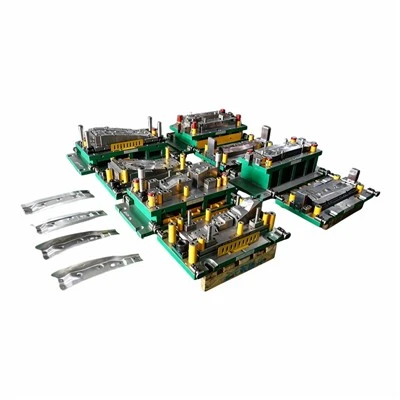
Let’s start with the basics. Fatigue life, in simple terms, is how long a part will last under repeated, cyclic stress before it cracks, deforms, or fails. For custom stamped parts—those made by shaping metal sheets into specific forms via dies, presses, and precision tooling—this stress usually comes from their intended use: a car’s suspension bracket flexing thousands of times a mile, a medical device’s spring contact opening and closing a hundred times a minute, a HVAC unit’s mounting bracket expanding and contracting with temperature changes. Unlike a part pulled in a lab test once, real-world use is repetitive, and even tiny, repeated forces add up.
Early on, I worked with a client who designed a line of commercial refrigeration units. They’d used a off-the-shelf stamped bracket from a catalog, and within six months, brackets were cracking on units installed in grocery stores’ loading docks. The catalog listed a “fatigue life of 100,000 cycles,” but that number was based on lab tests done in a controlled environment. In the loading dock, the brackets were also exposed to salt from ice melt, vibration from delivery trucks, and occasional impact from pallet jacks. By switching to a custom-stamped bracket made from a thicker, corrosion-resistant grade of steel, with rounded edges instead of sharp corners (a common catalog part shortcut), we boosted its fatigue life to over 1 million cycles, and the client hasn’t had a callback in seven years. That story sums up the biggest mistake people make when guessing fatigue life: assuming standard specs apply to custom parts.
So what actually determines a custom stamped part’s fatigue life? Let’s break down the factors I walk through with every client.
First, the material. Not all metal is the same. For custom stamped parts, common materials include low-carbon steel, stainless steel, aluminum, brass, and copper, each with wildly different fatigue properties. Low-carbon steel (like A36 or 1018) is cheap and easy to stamp, but it’s prone to fatigue failure because it’s softer and has a lower tensile strength. Stainless steel, especially grades like 304 or 316, is stronger and more corrosion-resistant, so it can handle far more cyclic stress. Aluminum is lightweight, good for aerospace or consumer electronics, but it has a lower fatigue limit than steel—meaning it will fail faster under repeated stress. Brass is often used for electrical contacts, but its fatigue life is also lower than most steels. We once had a aerospace client who tried using aluminum for a wing mount bracket; after lab testing, we found it would only last 12,000 cycles, which was way too short. Swapping to 6061-T6 aluminum (a heat-treated grade with better strength) boosted that to 50,000, but for the final design, we ended up using 4130 steel, which hit 250,000 cycles—enough for their 10-year aircraft lifespan.
Then there’s the stamping process itself, and how it affects the part’s fatigue life. Stamping isn’t just cutting metal; it’s bending, drawing, and shaping it, and those processes leave behind hidden stresses. Sharp corners, for example, are stress concentrators—even a tiny notch or sharp edge will make the part start cracking there first, cutting fatigue life by 50% or more. That’s why we always work with clients to round edges to a minimum radius (usually 1mm, depending on part size) when possible. Another hidden factor: work hardening. When metal is bent or stamped, the area around the bend gets harder, which can actually increase fatigue life—wait, is that right? Sometimes. For example, a steel spring clip that’s bent repeatedly needs that work-hardened area to resist deformation. But too much work hardening, from over-stamping a part, can make the metal brittle, leading to sudden fatigue cracking. That’s where our quality control team comes in: every custom part we make goes through a hardness test to make sure the work hardening is balanced, not too soft or too hard.
Surface finish also matters. Stamped parts can have a rough, mill finish or a smooth, polished finish. Rough surfaces have tiny scratches and tool marks that act like tiny notches, starting fatigue cracks early. We offer secondary processes like deburring, polishing, or shot peening to smooth those surfaces. Shot peening, in particular, is a game-changer for fatigue life: it bombards the part with tiny steel shots, compressing the surface layer and creating a residual stress that counteracts the tensile stress from use. We did a test on a set of brackets for a construction equipment client: parts without shot peening lasted 80,000 cycles, while shot-peened parts hit 320,000 cycles. That’s a 300% increase, all from a simple secondary process.
Now, how do we measure fatigue life for a custom stamped part? It’s not a one-number calculation. We use two main methods: lab testing and finite element analysis (FEA). Lab testing is the most accurate, but it’s also the most time-consuming and expensive. We take a sample of the part, mount it in a fatigue tester, and apply repeated cyclic stress (matching the client’s intended use) until it fails. We record how many cycles that takes, then add a safety factor—usually 2 or 3, to account for real-world variables like temperature, vibration, and corrosion. For a medical device part, which needs to be 100% reliable, we might use a safety factor of 5. FEA is a digital tool that lets us simulate stress on the part before we even make the prototype. We input the material, the stamping geometry, and the expected load, and the software shows us where stress concentrations are, how much the part will flex, and estimate fatigue life. It’s great for catching design flaws early—like a sharp corner we can fix before tooling is made, saving clients thousands in rework.
I should also mention the fatigue limit, a term you’ll hear a lot in manufacturing. For some metals, especially steels, there’s a fatigue limit—meaning the part will last indefinitely if the stress never goes above that threshold. Aluminum and brass don’t have a fatigue limit, so they will eventually fail no matter how low the stress. That’s why it’s so important to match the material to the use case. A part made for a load that will never exceed 500 psi can use a steel with a 500 psi fatigue limit, but an aluminum part will need to be designed with a much lower stress to last.
Over the years, I’ve seen too many clients cut corners on custom stamped parts and end up with costly failures. A few years back, a toy company came to us after their line of ride-on cars for kids started having handlebar brackets breaking. The catalog supplier they were using offered a cheap stamped steel bracket, but it had no secondary deburring or shot peening. The brackets failed in 2,000 cycles (about 1 month of use). We worked with their design team to adjust the bracket’s shape, use a higher-grade steel, and add shot peening. The new brackets lasted over 100,000 cycles—enough for 10+ years of kid use—at a cost that was only 15% higher than the catalog parts. They went from losing $50k a month in returns to becoming one of our most loyal clients.
So what does this mean for you, if you’re looking for custom stamped parts? Don’t just ask for a number; ask about the factors that go into fatigue life. Ask about material selection, edge design, surface finishing, and how we test or simulate the part’s performance. A reputable custom stamped parts supplier won’t give you a vague “it should last” answer—they’ll walk you through the trade-offs: if you need a light part for consumer electronics, we’ll suggest a heat-treated aluminum with shot peening, and tell you the expected fatigue life. If you need a heavy-duty part for construction equipment, we’ll recommend a thicker steel with rounded edges, and adjust the safety factor to match your application.
At the end of the day, custom stamped parts are only as reliable as the attention to detail that goes into making them. That’s why we don’t just stamp parts—we partner with our clients to design parts that meet their fatigue requirements, stay within their budget, and last for the life of their product. If you’re working on a project and want to make sure your custom stamped parts hold up, we’re here to walk through your needs, test prototypes, and find the right solution. Whether you’re building medical devices, automotive components, industrial equipment, or consumer goods, we can help you avoid the pitfalls of fatigue failure and build products your customers can trust.
To ensure your custom stamped parts deliver the long-term reliability your project demands, let’s connect to discuss your specific application and requirements.
Custom Stamping Die References:
- Dieter, G. E. (1986). Mechanical Metallurgy. McGraw-Hill.
- ASM International. (2004). Fatigue Data Book: Light Structural Alloys. ASM International.
- Juvinall, R. C., & Marshek, K. M. (2011). Fundamentals of Machine Component Design. John Wiley & Sons.
- Taylor, D. (2007). The Geometry of Cracks and Fatigue. Cambridge University Press.
- NASC (National Association of Stamping Companies). (2022). Fatigue Best Practices for Custom Stamped Metal Components.
Dongguan Changdong Tool & Die Co., Ltd.
With abundant experience, we are one of the most reliable custom stamped parts manufacturers and suppliers in China. Please feel free to buy advanced custom stamped parts made in China here from our factory. Good service and quality products are available.
Address: No. 56-B, Fumin South Road, Dalang Town, Dongguan City, Guangdong Province, China
E-mail: sales@stamping-die.com
WebSite: https://www.metalstampingdie.com/
