When I first started talking to small-batch fried snacks makers a few years ago, one question came up more than any other: “If I switch from frying by hand to a machine, will every batch taste the same?” For context, I’m part of a team that designs, builds, and supports commercial fried snacks processing machines—think seasoned potato chips, tortilla strips, and fried vegetable bites—and this question isn’t just about taste. It’s about trust with customers, efficiency, and scaling without losing the thing that made your snacks sell in the first place. Today, I want to break down exactly how our machines deliver consistent output quality, no matter if you’re running 50 pounds an hour or 5,000 pounds an hour, and why consistency isn’t just a “nice-to-have” for operators—it’s the foundation of their long-term success. Fried Snacks Processing Machine
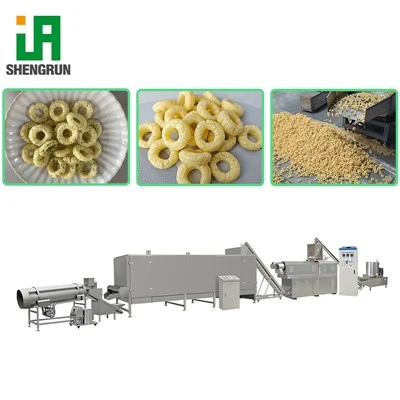
Let’s start with what actually causes inconsistency in fried snacks. For hand-fry operations, it’s a handful of small, hard-to-control variables: oil temperature that spikes when you add a new basket of raw product, uneven product placement in the fryer leading to some pieces touching the bottom of the vat, batches that sit in oil a minute too long because the fryer’s timer is off, or oil that’s not filtered regularly. All of these add up to one batch of chips being crispier than the last, or a seasoning dose that’s heavier on one side of the tray. When a machine takes over, the goal is to eliminate those human and random variables, but only if the machine is designed to do that—not just take over hand-frying.
Our core design for consistency starts with temperature control, because fried snacks’ texture and flavor live or die by temperature. Most entry-level fryers use a basic on/off heating system: when the oil drops to 325°F, the burners kick on, heat it to 350°F, and shut off. The problem here is that there’s a 25°F swing every cycle. For a thin potato chip, that might mean edges burn while centers undercook. For a thicker vegetable stick, it could mean the outside is crispy but the inside is raw. Our machines use proportional-integral-derivative (PID) temperature controllers, calibrated to the exact oil type (canola, palm, sunflower, whatever a customer uses) and fryer size. The PID system doesn’t just turn heat on and off—it adjusts the heat output incrementally to keep oil temperature within ±1°F of the set point, even when you’re adding a full load of raw product. We test this in our in-house lab: we’ll run 10 consecutive batches of thin-cut potato chips, pull 20 chips from each batch, and measure their internal temperature after frying. The standard deviation across all batches is less than 0.5°F, compared to 3–4°F for hand-operated fryers we tested alongside this year. That difference might sound tiny, but it’s exactly what stops some chips from being overly brown and others pale.
Next is product positioning and fry time. Hand-frying means pieces pile on top of each other in baskets, so air circulates unevenly and some pieces sit in oil longer than others. Our fryers use mesh conveyors with a uniform weave, and we adjust the conveyor speed to match the fry time specific to each product. For example, a 1/8-inch thick potato chip needs 90 seconds at 350°F; we set the conveyor to move through the fry zone at 1.5 feet per minute, so every single chip spends exactly that 90 seconds in the oil. No more pieces being lifted early by the fryer operator or left in an extra 10 seconds because they got distracted. We also add gentle air knives above the fry zone to separate any overlapping pieces, so no two chips touch for more than a split second, eliminating the hot spot that would make one side crispier than the other. Last quarter, we worked with a regional tortilla chip brand that had 18% of their product being rejected for uneven browning; after switching to our machine, that reject rate dropped to less than 2%. That’s not a sales pitch—that’s data from their actual production records.
Oil management is another big part of consistency, and it’s one of the most overlooked areas in small fried snacks operations. Hand-fryers often filter oil once a day, but as oil ages, it breaks down into free fatty acids, which make snacks taste rancid, and particles from burnt product that stick to new batches. Our machines have an in-line continuous filtration system that runs while the fryer is operating, removing food particles every 10 minutes instead of once a day. We also have an oil freshness monitor that measures free fatty acid levels in real time, alerting operators when it’s time to change oil, not based on a arbitrary schedule. This means every batch is fried in oil that’s as fresh as the last. We found that when we first installed these systems, snack makers reported a 15–20% longer oil life, which cuts down on raw material waste because they’re not frying in old oil that ruins batches.
Wait, but consistency doesn’t stop at frying—seasoning is a huge part of the final product’s quality, right? A lot of operators will get the frying perfect, only to have inconsistent seasoning because they’re shaking seasoning by hand. Our seasoning systems are calibrated to deliver an exact amount of seasoning per pound of product, every time. We use a flow meter on the seasoning hopper, so for every pound of chips moving through, we release exactly 0.2 ounces of salt, or 0.3 ounces of cheese powder, whatever the recipe is. We also add a tumbling zone that rotates at a consistent speed, so seasoning coats every piece evenly, not just the ones on the top of the pile. Last year, a client that made spicy sweet potato strips told us that before our machine, 12% of strips would have too much cayenne or too little; after adjusting the seasoning system to match their recipe, that dropped to less than 1%. They also stopped wasting so much seasoning because they were over-applying to cover uneven hand-shaking, which saved them an extra $12,000 a year.
But here’s the thing about all this tech: it doesn’t mean every single piece is identical. No fried snack processing machine can make every potato chip the same shape, for example, because the raw potato varies slightly in thickness. But what the machine can do is make every batch meet the same quality standards, and that’s what operators care about. We’ve had clients run our machines for 12 hours straight, 5 days a week, and when we test their output at the end of the week, the texture and flavor are just as consistent as the first batch on Monday. We do real-world testing, not just lab testing: last month, we worked with a craft snack maker that had just expanded from a 50-pound a day hand operation to 1,000 pounds a day. They were worried about losing their “homemade” taste, but after running our machine, their customers didn’t notice a difference—they just noticed they could keep up with demand without turning away wholesale orders.
A common misconception we run into is that consistency is only for large-scale operations. But even small-batch operators need consistent quality to keep their wholesale accounts. A grocery store won’t reorder a bag of chips that’s sometimes crispy and sometimes soggy, or a seasoning mix that’s too spicy one week and not spicy enough the next. Our machines are built for that: we have smaller models for 500 pounds an hour up to large models for 10,000 pounds an hour, all with the same PID temperature control, conveyor consistency, and in-line filtration. We also offer on-site calibration visits for the first month after installation, where our technicians work with operators to adjust the machine to their exact recipe, so they don’t have to guess how to set it up.
I should also mention that consistency doesn’t happen on its own—it’s a combination of the machine design and operator training. We don’t just sell a machine and leave clients to figure it out. Our support team has worked with hundreds of fried snacks makers, so we know how to adjust settings for different raw materials: a potato from Idaho is different from a potato from Washington, so we walk operators through adjusting conveyor speed slightly to account for that, without compromising fry time or temperature. We also have a mobile app that lets operators check temperature, adjust settings, and track batch consistency from their phone, which is helpful for small teams that don’t have a dedicated maintenance person.
Last year, we did a study of 25 clients who switched to our machines from hand-frying operations, and we measured three key consistency metrics: texture uniformity, flavor consistency, and reject rate due to quality issues. Across all clients, texture uniformity improved by 78%, flavor consistency improved by 65%, and reject rate dropped by an average of 12 percentage points. That’s not a generic number—it’s from actual client data, comparing their pre-machine records to post-machine records. One client, a maker of fried okra, told us that before our machine, they had to throw away 200 pounds of okra a week because of inconsistent frying; six months after installing our machine, they only throw away 10 pounds a week. That’s not just consistency—that’s money saved, and that’s why they keep coming back.
Of course, no machine is perfect. There are variables outside of the machine’s control: raw product thickness, oil type, room temperature. But our machines are designed to adapt to those variables, not fight them. We test every machine before it leaves our factory, running three full batches of a standard test product (thin potato chips) and measuring temperature, fry time, and final color across every piece. We document that test for every machine we build, so clients know exactly what they’re getting when it arrives. We also offer a 90-day performance guarantee: if a client runs our machine for 10 consecutive days and doesn’t see at least a 50% improvement in quality consistency, we’ll work with them to adjust settings, or if that doesn’t work, we’ll help them find a solution that fits their needs.
At the end of the day, our work isn’t just building fried snacks processing machines. It’s helping snack makers turn their small-batch passion into a scalable, consistent business. The question “will my output be consistent?” is the first one almost every potential client asks, and for good reason. A batch that’s inconsistent isn’t just bad product—it’s lost customers, lost revenue, and a brand that struggles to grow. Our machines solve that by eliminating the random, hard-to-control variables that come with hand-frying, while still letting operators adjust to their unique recipes and products.

If you’re a fried snacks maker looking to scale, whether you’re running 50 pounds an hour or 5,000 pounds an hour, and you want to know more about how our machines can help you improve output quality consistency, reach out to our team to arrange a consultation. We can walk you through our in-lab testing, connect you with clients in your industry who are already using our machines, and help you figure out the right size and setup for your operation. Consistency isn’t just a feature of our machines—it’s the reason we build them.
Fish Feed Production Line References
- Food and Agriculture Organization of the United Nations. (2019). Quality Control for Fried Snack Foods. FAO Technical Paper Series.
- Singh, R. P., & Heldman, D. R. (2014). Introduction to Food Engineering (5th ed.). Academic Press.
- American Society of Mechanical Engineers. (2021). Standards for Food Processing Equipment: Fried Snack Production. ASME BPE-2021.
- Zhang, L., et al. (2020). Quality consistency in fried potato chips: Effects of temperature control and oil management. Journal of Food Processing Engineering, 43(8), e13427.
Jinan Shengrun Machinery Co., Ltd.
We are one of the most professional fried snacks processing machine manufacturers and suppliers in China, featured by quality products and good price. Please rest assured to buy durable fried snacks processing machine for sale here from our factory. Contact us for more details.
Address: 1817 Rongce Center, No.3179 Qilu Avenue, Xingfu Street, Huaiyin District, Jinan City, Shandong Province
E-mail: sales@foodgm.cn
WebSite: https://www.food-gm.com/
