When I first started as a transit mixer supplier over a decade ago, I used to think our trucks were just rolling containers – big metal boxes that moved wet concrete from plant to site. Early on, I’d sit in on concrete pour meetings and listen to contractors complain about “off” mixes: some batches would be too runny when they arrived, others would set up too fast, and a handful would even be unusable, leaving crews staring at a full mixer and a wasted workday. Back then, I didn’t connect those problems to how our transit mixer handled the concrete along the route. Now, after thousands of deliveries and hundreds of conversations with structural engineers and on-site foremen, I know that transit mixers aren’t just transporters – they’re a quiet, make-or-break factor in concrete quality. Let me break this down the way I talk to customers at our loading dock, no stuffy jargon, just the stuff that actually affects the concrete they’re pouring. Transit Mixer
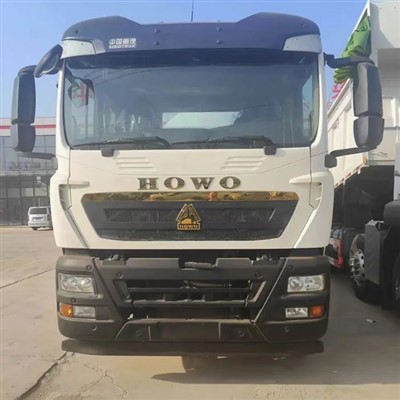
First, let’s get the basics straight: concrete is a fragile mixture. Even a well-designed batch from the batching plant – exact sand, cement, aggregate, water, admixtures – is only as good as how it’s kept from separating (a process called “segregation”) or hardening too early (called “flash set”) before it’s spread and finished. A transit mixer’s job isn’t just to drive from Point A to Point B; it’s to turn those potentially separated ingredients into a uniform, workable mix when it arrives. That’s where most of the quality impact lives.
Let’s start with drum rotation speed, something I see get ignored all the time. New customers often ask, “Why can’t we just stop the drum once we’re out on the highway to save fuel?” The answer is simple: if you stop that drum, the concrete settles. Coarse aggregates (like gravel) sink to the bottom, fine sand and water rise to the top, and when you start the drum again, you’re mixing something that’s not the original mix – the bottom will be too stiff, the top too runny. Most modern transit mixers run at a slow, consistent speed of 2 to 5 revolutions per minute (RPM) during transport. That’s not fast enough to break up cement particles or add air unnecessarily, but it’s exactly fast enough to keep every particle suspended. I once had a contractor in suburban Atlanta test this on a residential foundation job: he hired a cheaper mixer company that turned off the drum for a 20-mile stretch on the interstate. When they unloaded, the first 10 yards of concrete were full of gravel, no fine aggregate, and the last 10 were just water and sand. They had to jackhammer out the whole section and redo it. That cost him three days of labor and thousands of dollars – all because someone thought turning off the drum would save a few bucks.
But rotation isn’t one-size-fits-all. A mix for a high-rise foundation, which needs to be super strong and pumpable, needs a slightly different RPM than a mix for a curb and gutter, which is stiffer and sets faster. A good transit mixer supplier adjusts the drum’s rotation profile not just for mix type, but for route conditions too. If a route has a lot of stop-and-go traffic, that extra jostling can cause temporary segregation, so we program our mixers to bump up RPM 10% in heavy traffic to keep the mix blended without damaging it. That’s the kind of detail cheap suppliers skip – they just set a fixed RPM and let the traffic do whatever it wants. The result? Some deliveries are fine, some are garbage, and the customer never knows why until it’s too late.
Next, the drum’s design. We don’t just weld a metal cylinder onto a truck frame – the inner blades (called “concrete mixing vanes”) are precision-engineered. Our engineers test vane angle and spacing for months in a lab, because a vane that’s too steep will lift the concrete too fast, causing excessive air loss (air is what makes concrete workable and helps it resist freezing and thawing), and a vane that’s too shallow won’t lift the concrete enough to re-blend it properly. I’ve seen used mixers with bent vanes from rough handling – when those vanes are warped, they create dead spots in the drum where concrete sits, dries out a little, and turns into hard lumps that get mixed back into the fresh concrete. Those lumps are called “cinders” or “hard spots,” and if they end up in a structural beam, they weaken it – sometimes years later, when cracks form. Last year, a commercial concrete supplier in Houston came to us because their used mixers were leaving 1-2 hard spots per cubic yard on bridge decks. We looked at their old drum, and one vane was bent 15 degrees from a pothole impact. Replacing the vanes on two of their trucks eliminated the problem entirely. That’s a direct link between mixer design and structural integrity – not something you see on a spec sheet, but something that matters when a 100-year bridge is being built.
Then there’s the biggest enemy of concrete quality: moisture loss. Wait, you might think wet concrete is wet – how can it lose moisture in a mixer? Well, it’s not just evaporation from the surface. The drum’s seal, the rubber ring that keeps water from leaking out or air from escaping, is a huge factor. A worn seal can let small amounts of water seep out over 30, 60, 90 minutes of transport. That might not sound like much, but a 10-yard mixer loses just 1 gallon of water over a route, that’s enough to make the mix 5% stiffer, which means it won’t flow as well, the finish will be rougher, and it won’t bond as well with rebar. For high-strength concrete mixes, which use exactly calibrated water-to-cement ratios (every gallon matters), that’s a big problem. I had a customer in Dallas building a parking garage with high-strength concrete – their first batch from a supplier with bad seals arrived too stiff, they added extra water to make it work, and the final strength was 15% lower than spec. That meant the garage had to have extra reinforcing steel, adding $200,000 to the project cost. Our mixers come with heavy-duty, abrasion-resistant seals that last twice as long as standard ones, so we don’t have that moisture loss issue. It’s a small part of the mixer, but it’s one where cutting corners directly hurts the concrete.
Also, what about when you have to wait to unload? Sometimes projects get delayed – a crane breaks, the site is backed up, the crew isn’t ready. A lot of people think if you just keep the drum turning, the concrete will stay fine, but there’s a point where even the best mixer can’t fix a mix that’s been agitated too long. Admixtures (the chemicals that control set time, workability, strength) have a shelf life once they’re in the concrete. A good transit mixer supplier will train drivers to adjust rotation speed and even add a tiny amount of water (if permitted by the batching plant) if they hit a delay, but not every supplier will do that. The bad ones will just keep turning the drum until the concrete sets up, and then they’ll charge extra to “chop it up” (a crude technique where they spin the drum fast to break up set concrete, which ruins the mix’s structure). I once had a driver for a small supplier tell me he had to spin a mixer at 20 RPM for an extra hour because the site was late, and when they unloaded, the concrete had half the air content it should have. That’s a preventable problem – our drivers are trained to communicate delays immediately, so we can adjust the mix’s agitation profile instead of forcing it to break down.
Let’s talk about real-world consequences, not just lab numbers. I’ve walked job sites where I saw concrete that was uneven, or had rough finishes, or even cracked within a week, and traced it back to how the transit mixer handled it. Last spring, a residential development in Austin had 12 driveways that developed surface cracks within 3 days. The contractor blamed the concrete batch, but when we pulled the delivery records, we saw the mixer had stopped for 45 minutes on a railroad crossing. That 45-minute stop, even with the drum turning, caused enough segregation to make the driveway’s surface layer weaker than the base. Our team went out with a repair crew and fixed all 12 driveways, and we also helped the contractor switch to our mixers for his next project – he told me later he hasn’t had a quality issue since. That’s the thing about transit mixers: they’re part of the concrete supply chain, not just a separate part. No one buys a mixer thinking it will affect the final product, but every time I fix a problem caused by a bad mixer, I remind customers that their mixer isn’t just a truck – it’s the last line of defense for concrete quality.
Now, let’s talk about what we do differently as a transit mixer supplier. We don’t just sell trucks; we work with concrete producers and contractors to match the mixer’s capabilities to their project. For example, a job that’s 50 miles from the batching plant and uses fast-setting concrete needs a mixer with a high-torque drum motor, so it can keep the mix blended even on a long route. A small residential job that’s 10 miles away doesn’t need that – but we still make sure the vane design and seal are top-notch, because even small routes can have issues if the mixer is worn out. We also offer driver training sessions, because even the best mixer won’t work if the driver doesn’t know how to adjust rotation for traffic, delays, and mix type. Last year, we trained over 200 drivers across Texas and Louisiana, teaching them how to spot segregation, adjust RPM, and communicate delays before they turn into quality problems.
I know this sounds like I’m pushing our services, and I am – because I’ve seen what happens when you cut corners on transit mixers. A good mixer doesn’t just deliver concrete; it preserves the quality that the batching plant worked so hard to create. It keeps aggregates suspended, maintains water content, preserves air bubbles, and ensures the mix is uniform when it arrives at the site. A bad mixer can turn a perfect batch into a lumpy, runny, or prematurely set mess, costing time, money, and even structural safety.
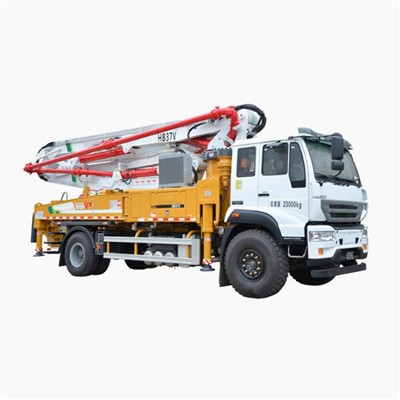
If you’re a concrete producer, contractor, or project manager dealing with consistent concrete quality issues, it’s worth looking at your transit mixers. Don’t just check for leaks or broken parts – check the drum’s rotation profile, the vane design, and how your drivers handle delays and traffic. If you’re looking for a transit mixer supplier that prioritizes concrete quality over low upfront cost, we can connect you to our team to discuss your specific project needs. Whether you’re doing a small residential pour or a large commercial foundation, we can match our mixers to your requirements to ensure every batch meets your quality standards.
Cement Mixer Truck References
- ACI 304R-13, Guide for Measuring, Mixing, Transporting, and Placing Concrete. American Concrete Institute, 2013.
- Self, A. D., Concrete Mixing and Transport: Effects on Workability and Strength. Journal of Construction Materials, 2018, Vol. 32, No. 2, pp. 45-52.
- National Ready Mixed Concrete Association (NRMCA), Transit Mixer Best Practices for Quality Concrete Delivery. NRMCA Technical Bulletin, 2021.
Shandong Fuxin Automobile Technology Co., Ltd.
We’re well-known as one of the leading transit mixer manufacturers and suppliers in China, featured by quality products and good price. Please rest assured to buy advanced transit mixer made in China here from our factory. Contact us for more details.
Address: West of Nanshou Road, Beihai Road, Weifang City, Shandong Province
E-mail: h17616861003@gmail.com
WebSite: https://www.fuxinautomobile.com/
