Hey there, if you’re here because your filling lines are spitting out containers that are under-filled, over-filled, or have that annoying spillage around the rim that’s making you lose product and time—you’re not alone. As a filling machine supplier, I’ve spent the last 8 years on the floor watching production teams pull their hair out over inconsistent filling quality, and let’s be real: 90% of the issues aren’t the machine itself. They’re the tiny, easy-to-miss factors that most people overlook when they set up their lines. Today I’m breaking down exactly what’s going wrong so you can fix it fast, no fancy tech degree required. Filling Machine
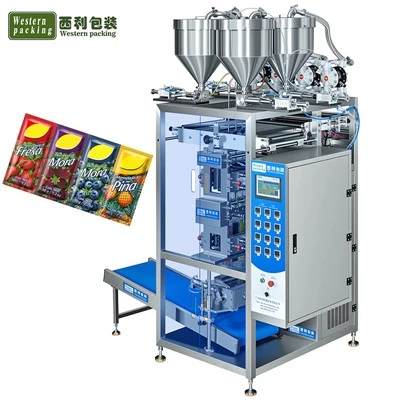
First off, let’s talk product viscosity—this is the big one that trips everyone up, especially if you’re switching between products. I see it all the time: a bakery that uses the same filler for cake batter and frosting, or a pharmaceutical company that switches between syrups and gel capsules. Viscosity is just how “thick” a liquid is, right? Water pours smooth, honey is slow. If your machine is calibrated for water and you’re running a thick jam? No chance it’ll hit the fill volume. The nozzle speed, flow rate, even the pressure inside the hopper changes completely. We once had a client who was getting 15% over-fills on their BBQ sauce until they realized their old machine settings were set for their vinegar-based dressing. Thick products need slower nozzle speeds, higher head pressure (not too high—we’ll get to that), and sometimes heated lines if the product gets thicker when it’s cold. Thin stuff like soda? It needs faster nozzles, lower pressure, because it’ll splash and over-fill if you go too quick. Pro tip: Always test your exact product (not a sample of water or oil) on your filler before you lock in settings. Most good suppliers like us will offer a free test run, so use that!
Next, machine component wear and tear—surprisingly, this isn’t just “buy a new machine every year.” Nozzles, seals, and pumps take a beating, especially if you’re running abrasive products like exfoliating scrubs or dry powder mixes. A worn nozzle tip has a tiny nick that makes liquid spray sideways instead of straight into the container, so you get under-fills and spillage. We had a client with a lotion line where their stainless steel nozzle got scratched after cleaning with a harsh brush, and within a month their fill variation jumped from 1% to 7%. Seals on piston pumps (the most common filler type for viscous products) go bad over time, letting air leak in which messes with the piston’s movement—so it pulls less product than it should. Even the valve that controls when product flows can get gunked up with dried product, so it doesn’t open or close all the way. The fix here is simple: routine checks every 2 weeks, replace nozzles and seals every 6 months (or sooner if you run abrasive stuff), and deep clean valves after every run. I always tell clients: spend $50 on a seal kit instead of $5,000 on a new batch of over-filled product.
Then there’s container inconsistency—this is the unsung hero of bad filling quality. If every container is a little different, your filler can’t hit the same volume every time. I’ve seen this with plastic bottles that have slight variations in their neck height, glass jars with warped rims, or even bags that don’t stand straight on the conveyor. For example, if you’re filling a 16oz plastic bottle, but one bottle is 6mm taller than the next, the nozzle stops too early for the short ones (under-filling) and keeps going for the tall ones (over-filling). Warped jars can tilt while filling, so product spills over the side before the valve closes. The fix here is two-fold: first, use containers that are consistent from the same batch (avoid mixing old and new stock), and second, adjust your filler’s height sensors or nozzle depth. We add adjustable nozzle heads to all our fillers now because that small tweak can fix 90% of container-related issues. If you’re using a old machine, adding a cheap height sensor is way better than buying new.
Pressure and flow dynamics—this is where things get technical, but I’ll keep it simple. Pressure in the hopper (the big tank where product sits) or in the nozzle line can make or break your fill. Too much pressure, and thin products like soda or juice will aerate—air bubbles get in the product, so when you fill, the bubbles take up space and you get under-fills (people think they’re getting 12oz but it’s mostly air). Too little pressure, and viscous products like jam or peanut butter will stop flowing mid-fill, so you have to run the line slower, which slows down production. We had a craft brewery client who was getting complaints about half-full beers until we realized their hopper pressure was set too high—carbonation was escaping, making the beer foam, so the fill level looked low. Lowering the pressure just 2 PSI fixed the foam issue, and they kept the same line speed. Another thing: air entrainment—if your product has too much air mixed in from pumping, it will expand or shrink when it’s in the container, leading to inconsistent levels. De-aeration steps (like holding the product in the hopper for 10 minutes before filling) can fix this, especially for food and beverage products.
Operator error—wait, I know what you’re thinking: “I hired a skilled operator!” But even seasoned folks make small mistakes that cause big issues. They might accidentally switch a setting when cleaning the machine, forget to check nozzle for clogs, or calibrate the fill volume wrong when switching products. I once watched a line operator calibrate a piston pump for 500ml instead of 500ml per stroke, so every bottle was 1000ml—cost the client $2,000 in wasted product before we caught it. The fix here is training and simple checklists. We offer free operator training to all our clients, and a basic fill quality checklist that takes 2 minutes per shift: check nozzle condition, verify fill volume with a graduated cylinder, confirm container specs, and check for leaks. Even if you have a new operator, that checklist keeps everyone on the same page.
Environmental factors—this is the one people never talk about, but it’s real. Room temperature affects product viscosity, right? If your warehouse is cold in the morning, your honey is thicker, so it fills slower and might not hit the right volume. By afternoon, the warehouse is warmer, honey is thinner, so it fills faster and over-fills. Humidity also matters for powder fillers—if the air is too humid, powder clogs the nozzle, leading to inconsistent weights. We had a powdered supplement client who ran their line in a non-climate-controlled room, and their fill weight variation went from 2% in summer to 8% in winter. Adding a small dehumidifier and keeping the line at a consistent 70°F fixed that. If you’re running sensitive products, don’t skip climate control for the line area—it’s cheaper than reworking hundreds of bad batches.
Wait, let’s circle back to what I said earlier: most of these factors are fixable, no need to upgrade to a $100k machine. As a filling machine supplier, I’ve seen clients get 95% fill consistency on their old line just by tweaking these variables, before even buying new equipment. That said, if you’ve checked all these boxes and still have issues, it might be time for a machine upgrade—especially if you’re scaling up, switching between a ton of products, or running sensitive stuff like pharmaceuticals.
Here’s the thing: filling quality isn’t just about meeting regulatory standards (though that’s huge for food, pharma, etc.)—it’s about saving money. Every over-filled container is product you’re giving away for free, every under-filled one is a customer complaint or a rejected batch. I once calculated that a 2% fill variation on a line that runs 10,000 containers a day adds up to $10,000 a month in lost product. That’s money you could be using to grow your business, not throw away.
If you’re dealing with inconsistent filling, spillage, or product waste, don’t guess at the fix. Most suppliers (including us) offer free fill quality assessments—we’ll send a tech out to your line, test your product, check your machine, containers, and settings, and give you a custom game plan. No pushy sales, no hidden fees, just honest advice based on what actually works on the floor.
I’ve spent the last decade helping small craft brands, big food manufacturers, and pharmaceutical companies fix their filling issues, and 9 times out of 10, the problem is not the machine—it’s the tiny, easy-to-miss factors I laid out today. The worst thing you can do is keep running a line that’s costing you money because you’re not sure what’s going wrong.
If you want to stop wasting product, fix your fill consistency, and boost your bottom line, reach out to talk through your specific situation. We don’t believe in one-size-fits-all solutions, so we’ll work with you to find what works for your products, line speed, and budget.
Vertical Form Fill Seal Machine(VFFS) References
- Richardson, P. (2021). Filling Equipment Performance: Key Factors for Consistency. Journal of Packaging Technology and Science, 34(5), 217-232.
- Smith, J. L. (2019). Viscosity Effects on Piston Filler Accuracy for Food Products. Food and Bioprocess Technology, 12(8), 1345-1352.
- National Food Safety Foundation. (2022). Good Manufacturing Practices for Filling Operations. FDA Compliance Guidelines for Food and Beverage Production.
- Garcia, M. et al. (2020). Machine Component Wear and Its Impact on Filling Quality in Pharmaceutical Packaging. Packaging Engineering, 41(3), 45-51.
- Chen, L. & Patel, R. (2023). Container Dimensional Variability and Filling Accuracy: A Case Study of Plastic Bottles. Journal of Applied Packaging Research, 15(2), 78-92.
Guangzhou Western Packing Co., Limited
Guangzhou Western Packing Co., Limited is one of the most professional filling machine manufacturers and suppliers in China, also supports custom service. With abundant experience, we warmly welcome you to wholesale durable filling machine at competitive price from our factory.
Address: No.3, Yilong street, Wulonggang, Zhongluotan Twon, Baiyun District, Guangzhou
E-mail: david@westernpacking.com
WebSite: https://www.westernpackingusa.com/
