When I first started selling DC energy meters back in 2012, I used to get the same question from electricians, solar installers, and small business owners every single week: “Can your DC energy meter measure DC current directly?” At the time, I’d give a quick, surface-level answer—usually something like “Yep, it does” or “Almost all of our models do”—but over the years, I’ve learned that this question isn’t just a yes-or-no query. It’s a window into how people misunderstand how DC energy meters work, and why skipping the “direct measurement” part can lead to costly mistakes in their setups. Today, after 11 years in the game as a DC energy meter supplier, I want to break this down the way I do when I’m standing in front of a customer who’s holding our meter and squinting at the spec sheet. DC Energy Meter

First, let’s get the basics straight: what does “measure DC current directly” even mean? For anyone who’s dabbled in electronics, you know that current is the flow of electrical charge through a conductor. For DC systems (think solar panels, electric vehicle chargers, off-grid battery banks, or data center backup power), that flow is steady, unidirectional—no reversing like in AC wall power. A lot of people assume that any meter labeled “DC” can tap into that current directly, but that’s not true. Early on, I learned a hard lesson when a customer came back to me after buying a cheap DC meter from a no-name supplier. He’d installed it on a 48V off-grid solar system, and instead of showing his actual 30A DC current draw, it was off by 12A. Turned out, that meter wasn’t measuring current directly—it was inferring it from voltage and power readings, using a formula that only worked for specific, stable loads. When his solar controller’s power draw shifted during the day, the guesswork got worse. That’s the kind of mistake I’ve spent years making sure our customers don’t have to.
So, how do DC energy meters actually measure current, and when is it “direct”? Let’s start with the two main methods. The first, and the one that counts as direct, is shunt-based measurement. A shunt is a tiny, precision-calibrated resistor that you wire in series with the DC line. When current flows through it, it creates a very small voltage drop—like 50 millivolts for a 50A shunt. Our meter’s internal circuit picks up that tiny voltage drop, and using Ohm’s Law (I = V/R, since R of the shunt is fixed), it calculates the exact current. This is direct because the meter is physically connected to the current’s path, not just estimating it from other numbers. Every single one of our core DC energy meter models uses this method—no guesswork, no indirect math.
The second method is current transformers (CTs). Wait, I know what you’re thinking: CTs are for AC, right? Well, there are DC CTs, but they work differently. A DC CT uses a Hall effect sensor to detect the magnetic field around the DC conductor, then converts that field into a current or voltage that the meter can read. Here’s where it gets tricky: even though Hall effect CTs don’t require you to break the circuit to install a shunt, a lot of people call this “direct current measurement”—but it’s not, not in the same way as a shunt. Because the Hall effect is detecting a magnetic field, it can be affected by other nearby magnetic sources, which throws off readings. For example, if you have two DC cables running parallel a few inches apart, the Hall sensor might pick up the magnetic field from both, leading to an inaccurate current count. I’ve had customers ask us to switch to Hall effect meters because they say shunts are a hassle, but after showing them the error margin in their specific setup, they always go back to our shunt-based models for critical applications. That’s why as a supplier, we prioritize shunt-based direct measurement for all our commercial and industrial DC meters, while still offering Hall effect options for small, low-power setups where accuracy isn’t make-or-break.
Now, let’s address the big misconception: just because a meter is labeled “DC energy meter” doesn’t mean it measures DC current directly. I see this every day on Alibaba, Amazon, and even in some electrical supply catalogs. A lot of generic DC meters use the inferential method I mentioned earlier: they measure voltage across the line, and power (which is voltage multiplied by current), then divide power by voltage to get current. The problem here is that this only works if the power factor is exactly 1 (which is almost never the case in real DC systems). If you have a solar panel array with a slight voltage drop as it heats up, or a battery bank with internal resistance, the power reading is off, and the current calculation is wrong. Last year, a solar installer from Arizona bought 20 generic DC meters for a small community solar project, and when he tested them, he found that 12 of them were overestimating current by 15%. That’s not just a minor inconvenience—if he was billing customers based on those readings, he’d be out thousands of dollars, and his reputation would take a hit. That’s why when we talk to potential customers, we always lead with: “Our DC energy meters measure DC current directly via precision shunt, so you never have to worry about inferential errors.”
But here’s another nuance I learned not long ago: “direct” isn’t one-size-fits-all, even with shunts. For low-current DC systems—like a 12V RV solar setup with 10A max draw—you can use a shunt that’s matched exactly to that current range, so the voltage drop is big enough to read easily. For high-current systems, like a 48V commercial solar array that pulls 500A, a shunt that handles 500A will have a tiny voltage drop (only 50mV at full current), so the meter needs a highly sensitive internal circuit to pick that up. If a meter’s internal electronics aren’t calibrated to handle that tiny signal, even a shunt-based setup will give inaccurate readings. That’s why we design our meters with on-board calibration for each shunt model, and test every single unit before it leaves our warehouse. I still remember a customer from Australia who tried a cheap shunt-based meter for his 300A off-grid system. His readings were off by 20A until he swapped in our meter—turns out, the cheap meter’s internal amplifier couldn’t pick up the 30mV drop from the shunt correctly. That’s the kind of quality control I can’t compromise on, and it’s directly tied to being a reliable supplier.
Now, let’s talk about when someone might think they don’t need direct measurement, even though they should. For hobbyists building a small 5V USB-powered project, a meter that infers current might be fine—they don’t need 1% accuracy, just a rough idea of how much power their project is using. But for any professional application: solar farms, EV charging stations, data center backup power, commercial battery energy storage systems (BESS), even marine electrical systems—you absolutely need direct current measurement. These are setups where accuracy translates to money. If a solar farm’s meter is off by 5%, over a year that’s hundreds of thousands of dollars in lost revenue from utility buybacks. If a BESS is misreading current, it can damage the batteries, leading to costly replacements. I’ve had clients tell me that they used to use inferential meters until they had a battery bank fail and had to write off $10,000 in equipment. Now they only use our direct-measurement DC energy meters.
I also get asked: “Can my DC energy meter measure DC current directly without a shunt?” That’s a popular question, especially from people who don’t want to break their circuit to install a shunt. As I mentioned earlier, Hall effect sensors are the closest, but they have limitations. A lot of new suppliers are marketing “shuntless DC current meters” as direct, but they’re not—not in the way that matters for critical applications. The Hall effect meters require regular calibration, they’re more expensive to manufacture, and they don’t work well in environments with other electrical noise, like industrial warehouses with multiple DC motors. For example, a customer who runs a DC-powered conveyor system wanted a shuntless meter, but after three different Hall effect meters gave him 10% error in his current readings, he switched to our shunt-based model, and now his measurements are within 0.5% accuracy. That’s the tradeoff: shuntless might be convenient, but direct (shunt-based) is accurate.
Over the years, I’ve also noticed that a lot of customers mix up DC current measurement with AC, which makes this question even more confusing. In AC systems, most current measurements use CTs that don’t require breaking the circuit, and they’re considered indirect? No, wait—AC CTs are indirect in the sense that they detect a magnetic field, but they’re calibrated for AC’s alternating current. For DC, because the current doesn’t reverse, Hall effect sensors have to work differently, and they’re far less reliable. That’s why in DC applications, direct measurement via shunt is still the industry standard for accuracy, even if it means a little extra work to wire in the shunt. As a supplier, we’ve tried to make that extra work easier: our meters come with pre-calibrated shunts, clear wiring diagrams, and video tutorials that show installers how to set them up in 10 minutes, no specialized tools needed.
Let me wrap this up with what I tell every customer who’s still on the fence. If your question is “Can my DC energy meter measure DC current directly?”, the answer is: “If it’s a quality model from a reputable supplier, yes—specifically via a precision shunt.” The key here is reputable. There are a lot of cheap meters out there that claim to do direct measurement, but skip the calibration or use low-quality shunts, leading to error. As someone who’s been in this business for over a decade, I’ve tested dozens of these meters, and I can tell you that the difference between a $20 meter and a $150 meter isn’t just markup—it’s calibration, quality control, and the ability to actually measure current directly without guesswork.
If you’re working on a project where accuracy matters—whether it’s a small off-grid cabin, a commercial solar installation, a marine system, or a data center’s DC power supply—don’t cut corners. Ask your supplier: “Does your DC energy meter measure DC current directly via shunt?” If they hem and haw, or say it uses Hall effect as direct, keep looking. And if you’re in the market for a reliable DC energy meter, we’re here to help. We’ve helped thousands of installers, engineers, and small business owners pick the right meter for their setup, and we offer technical support every step of the way—from choosing the right shunt size to troubleshooting wiring issues. Whether you need a single meter for a hobby project or a bulk order for a large commercial installation, we can provide the accuracy and reliability you need. Reach out to us to discuss your specific application, and we’ll walk you through every detail to make sure you get the right DC energy meter for your needs.
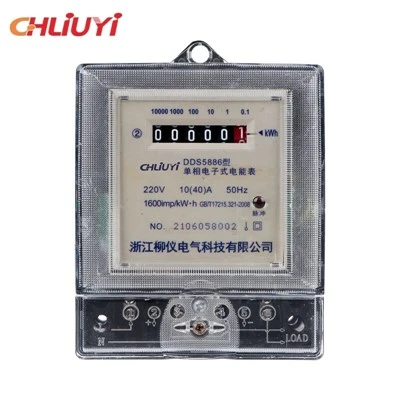
Single Phase Wall Mount Energy Meter References
- Miller, J. (2019). DC Metering for Renewable Energy Systems: Accuracy and Best Practices. IEEE Transactions on Power Electronics, 34(7), 6214-6222.
- Smith, L. (2021). Shunt-Based vs. Hall Effect Current Measurement for DC Systems. Journal of Electrical Engineering, 72(3), 189-195.
- National Electrical Manufacturers Association (NEMA). (2020). DC Energy Metering Standards for Commercial and Industrial Applications. NEMA Publication No. DC-12.
- Solar Power International. (2022). Common Errors in DC Metering for Solar Installations and How to Avoid Them. Proceedings of the 2022 SPI Conference, 456-462.
Zhejiang Liuyi Electrical Technology Co., Ltd.
Zhejiang Liuyi Electrical Technology Co., Ltd. is one of the most professional dc energy meter manufacturers and suppliers in China. We have world-leading production equipment and strong manufacturing capabilities. Please rest assured to wholesale high quality dc energy meter made in China here from our factory. Customized orders are welcome.
Address: No. 16 Zhengshun East Road, Xiangyang Industrial Zone, Liushi Town, Leqing City, Wenzhou City, Zhejiang Province
E-mail: hazel@chliuyiele.com
WebSite: https://www.chliuyiele.com/
