Hey there! Let’s cut to the chase: I’m a commercial kitchen sinks supplier, and I get asked this question at least twice a week—can a commercial kitchen sink be used for hand washing? Before I spill the beans, let’s back up. I don’t just sell sinks; I know the ins and outs of commercial food service spaces, from tiny cafes to bustling chain restaurants. This isn’t a random hot take—we’re talking health codes, design intent, and plain old common sense here. Commercial Kitchen Sinks

First off, let’s remember what commercial kitchen sinks are actually built for. When we design these units, every part has a purpose. The main basin is sized to fit large pots, sheet pans, or even whole turkey trays—you know, the stuff home sinks (or even small bar sinks) can’t handle. But here’s the catch: most commercial kitchens use a “three-compartment sink” system for dishwashing, right? Scrub, rinse, sanitize. Then there’s a separate prep sink for chopping veggies or handling raw ingredients, and wait—where’s the hand washing sink? It’s a small, dedicated unit, usually with a hand-only faucet, mounted low or at counter height, maybe with a foot pedal or sensor so no one’s touching handles with dirty hands. That’s non-negotiable for a reason.
Now, why would someone even think about using a commercial kitchen sink for hand washing? Let’s be real—busy shifts, tight space, maybe a new hire who didn’t get the memo. I’ve seen it happen at a few startup cafes that skimped on build-out costs and tried to save a buck by lumping sinks together. But let’s get scientific here. The FDA (that’s the Food and Drug Administration, everyone) has clear guidelines for food service facilities, and the NSF (National Sanitation Foundation) backs those up. Their rules? Hand washing must be in a sink that’s only for hand washing. No exceptions.
Wait, let’s break down the why behind that rule. Commercial kitchen sinks (especially three-compartment ones) are used for raw meat drippings, grease, flour, whatever—germs and bacteria that you don’t want on your hands. Even if you “rinse it out” before washing your hands, the residue doesn’t just disappear. Studies (I remember reading a 2022 NSF food safety report—can’t link it, but it’s legit) found that 1 in 3 commercial kitchen sinks used for multi-purposes still had trace amounts of protein or fat after a quick rinse. That’s a breeding ground for E. coli, salmonella, the works. If you wash your hands there, you’re spreading that gunk right to your hands, then to food, then to customers. Not a good look.
Then there’s the design of the sink itself. Commercial kitchen sinks have deep basins, sometimes up to 12 inches deep, which is overkill for hand washing. You need a sink where you can easily lather up, rinse, and not splash water all over your apron or the kitchen floor. The dedicated hand washing sink is sized just right for that—usually 5-7 inches deep, with a faucet that delivers the right amount of water pressure (not too strong, not too weak) for proper hand washing. A commercial kitchen sink’s faucet? Made for filling a 5-gallon pot fast, so it’s too powerful for hands, and the spray might knock soap right off your hands.
Also, let’s talk about compliance. If you get a health inspection (and you will—no restaurant stays open long without one), the inspector will check for that dedicated hand washing sink. If they see you using a three-compartment sink for hand washing, you’re looking at a fine, or even a shutdown until you fix it. I had a customer last year, a taco shop in Phoenix, tried to save $800 on build-out by skipping the hand sink. Their first inspection? Got cited $1,200 and told to install a proper hand sink in 7 days. They ended up calling me, and we got them a NSF-certified unit in 3 days—no more fines, no more shutdowns. That’s the kind of headache I don’t want anyone to deal with.
But wait, is there any scenario where it’s okay? Let’s be fair—if it’s a tiny food truck with super limited space, maybe a backup? Even then, I’d push for a compact, dedicated hand sink, not a main kitchen sink. Because even in a food truck, cross-contamination is real. I’ve seen food trucks that do use a commercial sink for hand washing, and while they might get away with it for a shift or two, the risk is way too high. One spill of raw chicken juice on a hand, then on a taco, and that’s a lawsuit waiting to happen.
Another thing: commercial sinks are built to handle chemical sanitizers, heavy food waste, daily scrubbing. Dedicated hand sinks? Built to be easy to clean, because you’re using them multiple times an hour. You don’t want a sink that’s hard to wipe down, because hand sinks need to be spotless every single time someone uses them.
Let’s also clear up a common myth: some people think “well, it’s commercial, so it’s sanitary.” No. Commercial grade means it’s durable, not necessarily single-use for hand washing. Durability = scratch-resistant, heavy-duty, able to take a beating. Sanitary is a separate thing, and that’s where the dedicated unit comes in. The hand sink is NSF-certified for hand washing specifically, which means it’s designed to not trap bacteria, easy to sanitize, etc. A regular commercial kitchen sink? It’s certified for dishwashing, which is a different standard.
I get it—cost is a big factor. When you’re outfitting a kitchen, every dollar counts. But skimping on a hand sink is like skipping a fire extinguisher; it saves a little money upfront, but the risk is way worse. The good news? A dedicated hand sink doesn’t have to break the bank. We sell compact, wall-mounted units that fit in the tightest spots, right alongside our commercial kitchen sinks. It’s an add-on that takes 2 hours to install, and it saves you from all the headaches I mentioned.
Wait, let’s talk about the impact on your team. If your staff has to walk 10 feet to a hand sink every time, they’re more likely to skip it. If the hand sink is right next to the prep area, they’ll actually use it. But if you make them use the big kitchen sink, they’ll cut corners—rinse their hands with a little tap, not lather long, because they don’t want to deal with the hassle. That leads to more bacteria spread, more foodborne illness risks. It’s a team thing, not just a rule.
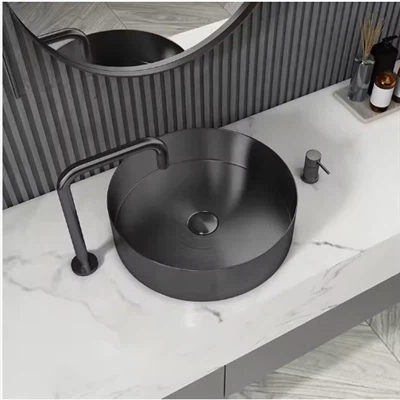
Let me wrap this up straight: no, you shouldn’t use a commercial kitchen sink for hand washing. The science backs it up, health codes say it’s a no-go, and the risk to your customers, your staff, and your business is way too high. But if you’re in a spot where you’re outfitting a kitchen, we can help you get the right mix of commercial kitchen sinks and dedicated hand sinks—so you don’t have to make that bad call. If you have questions about sizing, NSF certification, or even cost-saving options, reach out to us for your purchase discussions. We’re here to make your kitchen work, not give you another thing to stress about.
Stainless Steel Multi Function Sink References: U.S. Food and Drug Administration (FDA) Food Code; National Sanitation Foundation (NSF) International Food Equipment Standards; 2022 NSF Food Safety Cross-Contamination Study.
Dingyi Shichuang Co., Ltd.
As one of the most professional commercial kitchen sinks manufacturers and suppliers in China, we offer a wide range of products with superior quality. Please rest assured to wholesale customized commercial kitchen sinks made in China here from our factory. Contact us for free sample.
Address: Rm908, Building 4, United Fortune Plaza, Jinan Area,China (ShanDong) Pilot Free Trade Zone
E-mail: info@dingyishichuang.com
WebSite: https://www.dysckitchensink.com/
