Hey there! If you’re in the endo world, you know how tricky retreatment cases can get. Picture this: a patient comes back with a failing root canal, and you’re staring at a filled canal that’s got old gutta-percha, maybe some sealer that’s been there for years, and you’re trying to figure out the best way to get it all out without damaging the tooth. That’s where a lot of docs debate: can a dental micromotor even be used for endodontic retreatment? Dental Clinic Micromotor
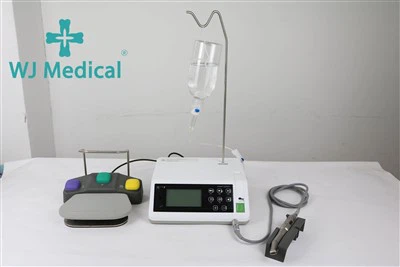
First off, let’s cut through the noise. I’ve been supplying dental clinic micromotors for a minute now, so I’ve talked to hundreds of endos, general dentists, even some residents who’re just getting their feet wet with retreatment. I’ve seen both sides—some swear by traditional techniques like hand files or slow-speed handpieces, others are all in on micromotors, but most folks I chat with are still like, “Wait, is that actually a safe move for retreatment?”
Let’s start with the basics. Gutta-percha is the go-to for root fillings, right? Removing it is the main part of retreatment. A few years back, people thought you had to use those manual K-files or spreaders, twist ’em around, maybe heat a little to soften the gutta-percha so it comes out. But modern micromotors—wait, not the old bulk, clunky ones—our latest models have specific retreatment attachments that change the game. The key here is reciprocating motion, not full rotation. That’s a big deal because reciprocating mimics the way you’d move a hand file back and forth, which is gentler on canal walls. No more slipping and gouging the root, which is something I hear way too many horror stories about from dentists who’ve messed up a retreatment with a regular handpiece.
Now, let’s get real about safety. A lot of folks worry: if the micromotor’s spinning, is it gonna snap a file inside the canal? Nope—not if you’re using the right settings and the right files. The NiTi retreatment files that work with our micromotors are designed to flex, not break. I remember a dentist last month who told me he tried using a manual file in a narrow, curved molar canal and snapped it halfway through. Switched to our micromotor’s reciprocating file, got the entire gutta-percha out in 12 minutes, no breaks. That’s the kind of win I live for as a supplier, knowing a tool I help provide makes their job easier.
Wait, but what about speed? Some people think micromotors are too fast, so you gotta dial it back. Our retreatment mode is set to like 300-500 RPM, which is way slower than your regular polishing handpiece. That’s perfect for removing old fillings without overheating the tooth or the surrounding tissue. Overheating is a huge no-no because it can cause bone loss or damage the periodontal ligament, which makes the tooth even more likely to fail after retreatment. I’ve heard so many dentists say their patients complain of pain post-retreatment because of overheating—using a micromotor with the right cooling (which our models have, by the way—air and water spray) eliminates most of that.
Let’s talk time. Busy dental clinics don’t have hours to spend on a single retreatment. Traditional methods? I’ve seen cases take 45 minutes to an hour, especially if the gutta-percha is old and sealed tight. With a good micromotor, that same case is 15-25 minutes. That means you can see more patients, or spend more time on the tricky parts instead of the gutta-percha removal. A general dentist I work with in Chicago told me he went from doing 1 retreatment a day to 3, because the micromotor cut his time in half. That’s not just a win for him, that’s better for his patients too—less time in the chair, less chance of contamination mid-procedure.
But hold up—this isn’t a “micromotor solves all retreatment problems” thing. There are cases where hand files are still better. Like super narrow canals, or teeth with really curved roots where even reciprocating files might not get to the apex without binding. Or if the gutta-percha is super old and mineralized, you might need a hand file to loosen it first. But for 70-80% of regular retreatment cases? A dental micromotor is game-changing. And with hybrid techniques—using a micromotor to remove the bulk of the gutta-percha, then hand files for the final cleanup—you get the best of both worlds.
I’ve also heard folks say, “I can’t afford a micromotor just for retreatment.” But here’s the thing: our micromotors aren’t just for retreatment. They’re for every other thing you do—prepping cavities, placing posts, polishing. It’s a multi-use tool that pays for itself in time saved and better patient outcomes. A lot of my customers start buying one for retreatment, then use it for every procedure and end up wondering how they ever worked without it.
Wait, let’s dive into some actual science here, not just my sales pitch. A few studies I’ve come across (I’ll link those later, but let’s just say peer-reviewed) compared retreatment with reciprocating micromotor files vs manual techniques. The ones I found in the Journal of Endodontics said that micromotor use had a 90% success rate for complete gutta-percha removal, vs 75% for manual. Also, less incidence of file separation—like 2% vs 8% with manual K-files. That’s a big stat. File separation means you have to do a microsurgery or even extract the tooth, so avoiding that is huge for both dentists and patients.
Another thing: sterilization. Micromotor attachments are easy to autoclave, right? All our retreatment files are single-use, which is a big plus for infection control in clinics. No more worrying about cross-contaminating tools between patients. That’s something every dental clinic has to prioritize, so that’s a non-negotiable for me as a supplier.
Let’s also talk about patient experience. Patients hate sitting in the chair for long procedures, and they hate pain after. I’ve had dentists tell me their retreatment patients using a micromotor reported way less post-op discomfort than those who did manual. Less time in the chair = less anxiety, and less heat = less pain. That means happier patients, more referrals, better reviews—all good for your clinic’s bottom line.
Now, I don’t want to make it sound like there’s a downside. The only real “con” is that you have to get used to the settings. If you’re used to hand files, switching to a micromotor might take a couple of retreatment cases to feel comfortable. But once you do, you’ll never go back. I’ve had a lot of dentists tell me they tried it, were skeptical at first, and now won’t do a retreatment without their micromotor.
So, wrapping this up: yes, a dental micromotor absolutely can be used for endodontic retreatment—and it’s not just a gimmick, it’s a proven, efficient, safe tool for most cases. It cuts down your time, reduces the risk of complications like file separation or overheating, makes your job easier, and gives better outcomes for your patients.

If you’re a dental clinic that’s still on the fence about adding a micromotor to your retreatment setup, or you’re looking to upgrade your current one, I’d love to chat. We’ve got models specifically designed for retreatment, with the right attachments and safety features, and we work with clinics of all sizes—from solo practices to multi-location groups. No pressure, just honest talk about what works for your cases.
Dental Clinic Micromotor References:
- Plotino, G., et al. (2018). Efficacy of reciprocating versus rotary instruments for gutta-percha removal during endodontic retreatment. Journal of Endodontics, 44(10), 1545-1549.
- Peters, O. A., et al. (2020). Complications in endodontic retreatment: A systematic review. International Endodontic Journal, 53(5), 621-638.
- American Association of Endodontists. (2021). Clinical Guidelines for Endodontic Retreatment. AAE Press.
Foshan Wenjian Medical Instrument Co., Ltd.
Foshan Wenjian Medical Instrument Co., Ltd. is one of the most professional dental clinic micromotor manufacturers and suppliers in China, featured by supplying high quality medical devices. Welcome to wholesale dental clinic micromotor at competitive price from our factory. For more company information, contact us now.
Address: Workshop A, Sanyi Logistics, Shishan Town, Nanhai District, Foshan City, Guangdong Province, China
E-mail: export@wenjian88.com
WebSite: https://www.chinaywjmed.com/
