If you’ve ever stood in a hydraulic supply shop or walked the floor at a fluid power trade show, you’ve likely seen a shelf of hydraulic seals next to a smaller rack of pneumatic ones. For years, I’ve had customers pull me aside with the same question: “Can I just grab a hydraulic seal for my pneumatic application? They look almost the same, and it’s way cheaper than waiting for the pneumatic specific ones.” Pneumatic Seal
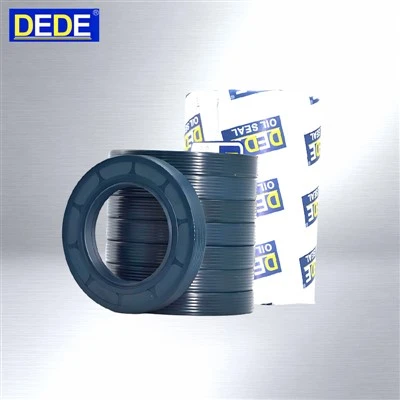
As a pneumatic seal supplier, I get this line of thinking. Cost is a big factor, and when two seals look nearly identical—same diameter, same cross-section, even the same material code at first glance—it’s easy to write off the differences as minor details. But after 12 years selling pneumatic seals, and watching dozens of customers come back with failed machines, warranty claims, and costly downtime, I can tell you: that “minor difference” isn’t just important—it’s the reason mixing seals between hydraulic and pneumatic systems will almost always end in disaster.
Let’s start with what makes these two systems fundamentally different, because that difference is where seal requirements split. Hydraulic systems run on oil or water-based fluids at 1,000 to 5,000 PSI, sometimes higher for heavy industrial or mobile equipment. Pneumatic systems? They use compressed air, usually between 80 and 150 PSI, with rare exceptions that top 300 PSI. The medium itself—oil vs. air—matters too. Hydraulic fluids are viscous, lubricating, and designed to do work; air is dry, abrasive (it carries tiny dust particles unless filtered, no matter how good your filters are), and has almost no lubricating properties.
Seals are designed to adapt to their environment, and that includes the system they live in. Let’s break down the three most critical factors that separate hydraulic and pneumatic seals: material formulation, design geometry, and durability under duty cycles.
First, material. If you look at a hydraulic urethane seal and a pneumatic urethane seal side by side, you might think they’re identical. But pull out a material data sheet, and you’ll see the difference is night and day. Hydraulic seals are formulated for high pressure, so they’re harder—often 90 Shore A or higher. That hardness resists extrusion through tiny gaps between the piston and cylinder wall at thousands of PSI. Pneumatic seals? They need to be softer, usually 70 to 80 Shore A. Why? Because air is dry, and soft seals create a tighter seal at lower pressures, reducing leakage (what we call “blow-by” in pneumatic systems). A hard hydraulic seal, forced to seal against dry air, will sit there like a brick: it can’t conform to small surface imperfections on the cylinder or rod, so you’ll get constant air leakage past the seal, your actuator won’t build enough pressure to move, and you’ll waste compressed air—wasting energy and money every minute the machine runs.
Worse, material compatibility. Hydraulic seals are built to resist oil, glycols, and the additives in hydraulic fluids. Pneumatic seals? They’re tested against ozone (from compressed air systems, which can generate ozone in high-cycle applications) and even small amounts of moisture. I had a customer last year who installed a hydraulic seal in a pneumatic valve actuator, and within three weeks, the seal swelled up so bad it jammed the entire valve. The culprit? The pneumatic system used a small amount of water-based mist lubrication, and the hydraulic seal’s material wasn’t formulated to resist water. It expanded 15% in size, which was more than enough to lock the piston in place, costing them a day of production and a new valve. That’s the kind of mistake that happens when you assume “similar material = interchangeable.”
Next, design geometry. This is where a lot of people miss the mark. Hydraulic seals usually have a thick cross-section, reinforced back-up rings, and a sharper lip. Back-up rings are non-negotiable for hydraulic systems at high pressure—they stop the seal from being pushed into the gap between the moving part and the cylinder wall (called extrusion gap). Pneumatic seals, on the other hand, have a thinner profile, often no back-up ring, and a much rounder, more flexible lip. That round lip is key: it “rolls” as the piston moves in the cylinder, which is essential for pneumatic systems that cycle much faster than most hydraulic applications.
Let’s use a common example: a rod seal. A hydraulic rod seal has a stiff lip and a thick body to hold up under 3,000 PSI. A pneumatic rod seal has a thin, spring-energized lip that creates a light, consistent seal at low pressure. If you put that hydraulic rod seal in a pneumatic cylinder, the stiff lip can’t move as the rod slides back and forth. It will wear unevenly, creating tiny gaps in the seal, leading to leakage. Even worse, if the pneumatic cylinder cycles fast—say, 10 times per second in a packaging machine—the hydraulic seal’s stiff body can flex too little, causing it to twist or break mid-cycle. I’ve had a food processing client tell me they replaced pneumatic seals with hydraulic ones to cut costs, and within a week, they had 12 broken seals in their filling line, costing them $15,000 in lost product and repairs. That’s not a cost savings—that’s a loss.
Then there’s the matter of friction and wear. Pneumatic systems run dry, which means seals have to handle much higher relative friction than hydraulic seals. Hydraulic systems have a lubricating fluid that coats the sealing surfaces, so seals can slide with minimal friction. Pneumatic seals have to slide against metal surfaces with almost no lubrication, so their surfaces are often treated with special low-friction coatings—like PTFE or molybdenum disulfide—to prevent wear. Hydraulic seals don’t get that coating; their material is designed to work with oil, not dry metal. So over time, the hydraulic seal’s lip will grind against the cylinder wall, wearing down unevenly, and failing much faster than a properly matched pneumatic seal. A pneumatic seal in a pneumatic application should last 1 to 3 years in normal industrial use; a hydraulic seal in the same application might last less than 6 months.
But wait—what if the pneumatic application is high pressure, like a 300 PSI air cylinder? Could a hydraulic seal work there? Let’s test that logic. Even at 300 PSI, the demand on the seal is still different than hydraulic. 300 PSI air is 1/10th the pressure of a typical hydraulic system, but the dry medium means the seal has to handle more friction, no lubrication, and ozone exposure. A hydraulic seal is not formulated for ozone; ozone will break down the rubber in hydraulic seals over time, making them crack and leak. I had a customer working in a high-pressure pneumatic press who tried hydraulic seals, and within two months, the seals had developed cracks from ozone, leading to a catastrophic seal failure that damaged the press’ piston, costing $50,000 in repairs.
Another common misconception is that seals are just rubber rings. No—seals are precision parts, engineered for their specific system. A pneumatic cylinder’s seal has to move millions of times over its lifecycle, withstanding constant friction, temperature changes, and small amounts of contamination. A hydraulic seal is built to hold back high-pressure fluid, with extrusion resistance, but not for the dry, fast cycles of pneumatics.
Don’t get me wrong—I’m not saying there’s never overlap. There are some specialized seals that work in both systems, but those are rare, and they’re explicitly labeled as dual-purpose. Even then, I always recommend checking the material data sheet and design specifications. I’ve seen dual-purpose seals fail in pure pneumatic applications because their material is still formulated more for hydraulic use, leading to the same friction and wear issues I mentioned earlier.
So, let’s wrap this up. Can you use a hydraulic seal in a pneumatic application? Technically, you could. But you shouldn’t. It’s a short-term cost savings that leads to long-term downtime, higher repair bills, and lost productivity. As a pneumatic seal supplier, my job isn’t just to sell you the right seal—it’s to help you avoid the mistakes that cost you money. I’ve spent years learning the ins and outs of both hydraulic and pneumatic seals, and every time a customer comes to me with a failed seal from mixing systems, I tell them: the right seal for your application is the one engineered for that application.
If you’re working on a pneumatic system, whether it’s a small actuator in a packaging machine, a large valve in a power plant, or a custom pneumatic press, you need seals designed for pneumatics. We stock a full line of pneumatic rod seals, piston seals, wiper seals, and custom seals tailored to your specific system. We can help you review your application, answer any questions about material compatibility or design, and make sure you get the right seal the first time—no wasted time, no costly downtime.
Don’t risk your equipment on a cheap, mismatched seal. Reach out to us to discuss your pneumatic sealing needs today, and let us help you keep your system running smoothly.
EG Seal References
- Fluid Power Seals and Materials Handbook, National Fluid Power Association (NFPA), 2021.
- Pneumatic System Design and Sealing Technology, SAE International, 2019.
- Seal Compatibility Guide, Parker Hannifin Corporation, 2022.
- Hydraulic vs. Pneumatic Seals: Performance Comparison, Society of Tribologists and Lubrication Engineers (STLE), 2020.
- Ozone Resistance in Elastomeric Seals, Rubber Chemistry and Technology, Vol. 93, No. 2, 2020.
DEDE SEAL Co., Ltd.
DEDE Seal Co., Ltd. is one of the most experienced pneumatic seal manufacturers and suppliers in China for over 35 years, featured by quality products and good price. Please feel free to buy bulk customized pneumatic seal made in China here from our factory. Welcome to contact us for pricelist.
Address: Hunan Road, Pudong New Area, Shanghai, China
E-mail: info@dedeseal.com
WebSite: https://www.dedesealing.com/
